Warehouse Inventory Management Software Built for Industrial Operations
mInventory is Innovapptive's warehouse inventory management software for MRO and industrial stores. Barcode-verified receiving, kitting, picking and cycle counting run in one native app that works with no signal, and every movement posts to SAP, Maximo or Oracle as it happens. No paperwork, no double entry.
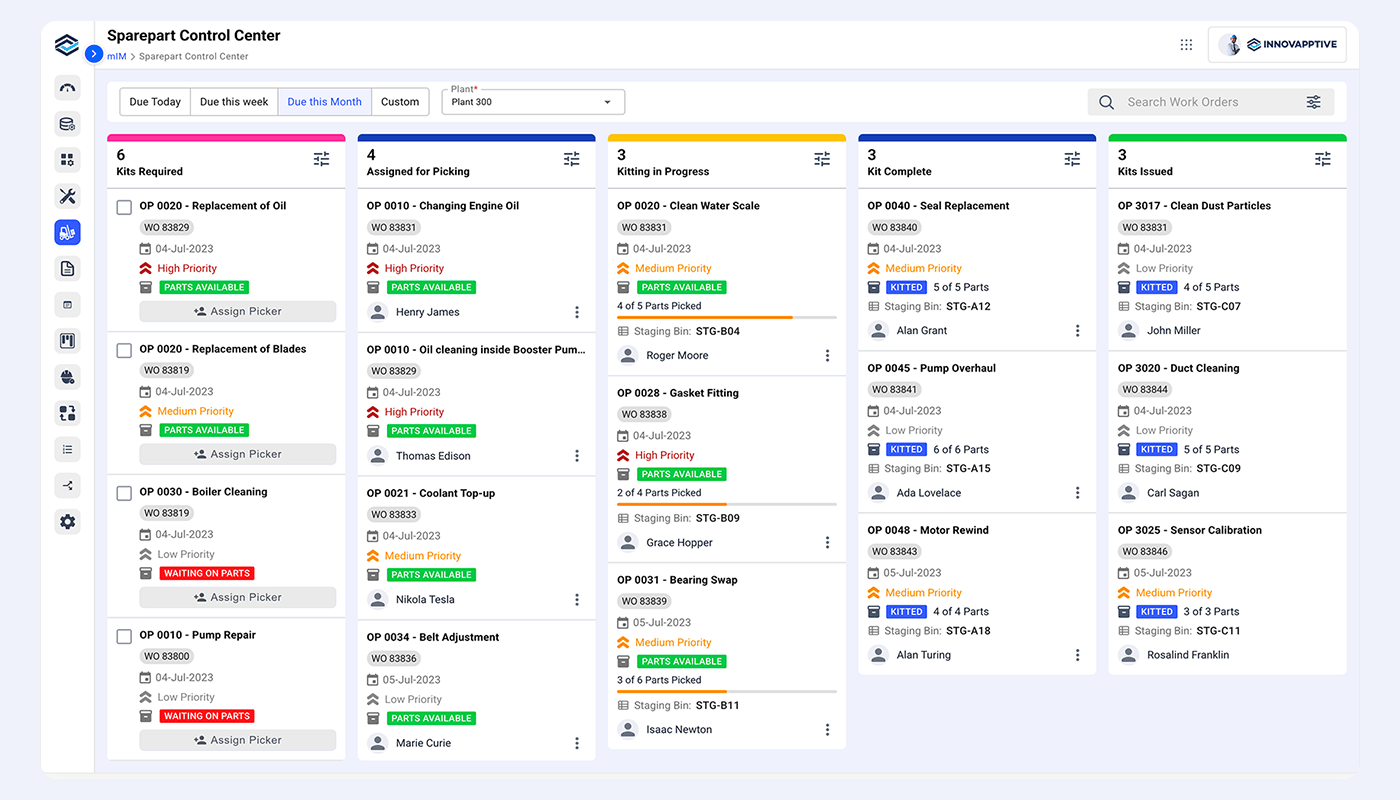
Spare Parts Control Center: 90% Less Loss of Non-Stocked Material in the Warehouse
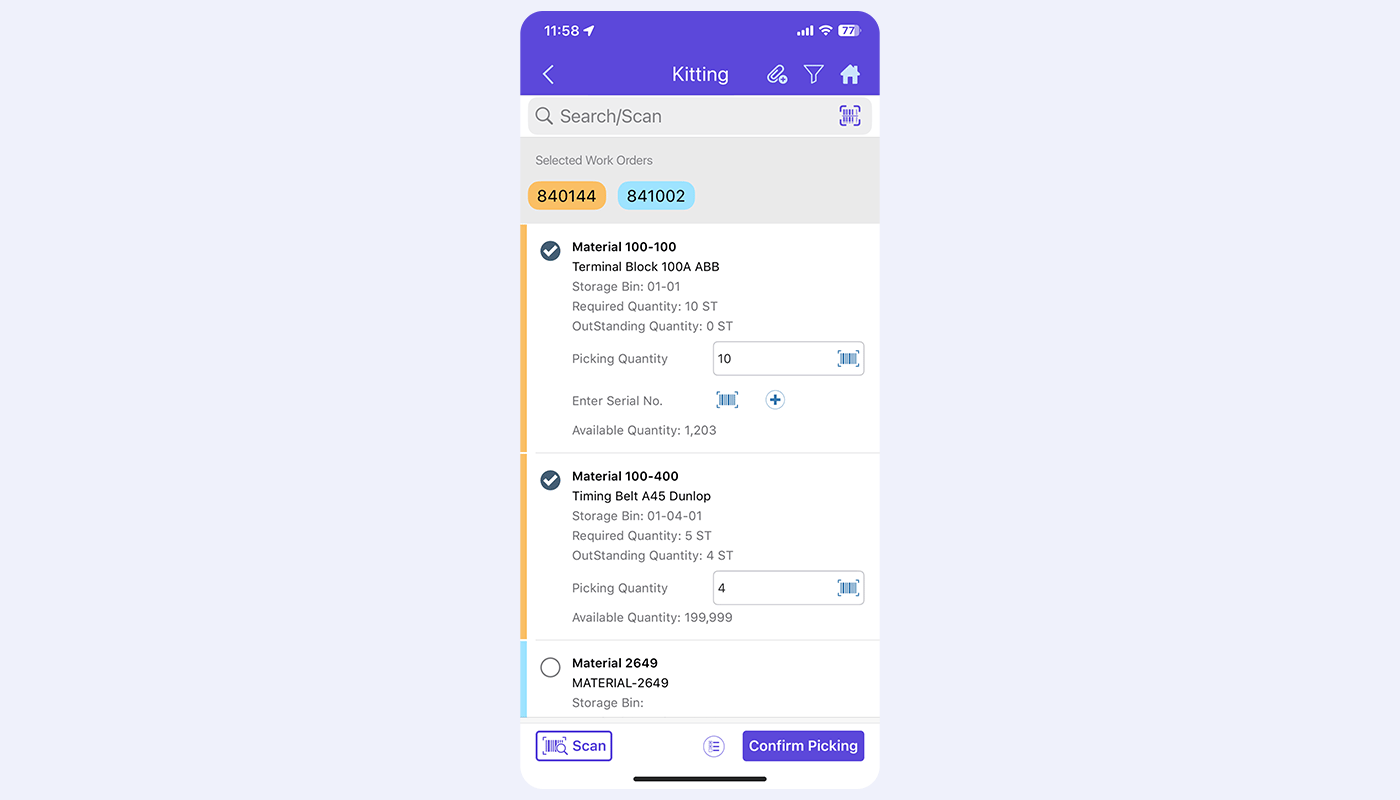
Multi-Order Picking With Optimal Route Determination: 50% Productivity Gain on Small Orders
Offline-First Native Execution, Pre-Integrated With SAP, Maximo and Oracle
2026 · Frost & Sullivan 2026 Company of the Year, for Global Connected Worker Platforms • Frost Radar Leader, Connected Worker • 50+ ERP & historian connectors
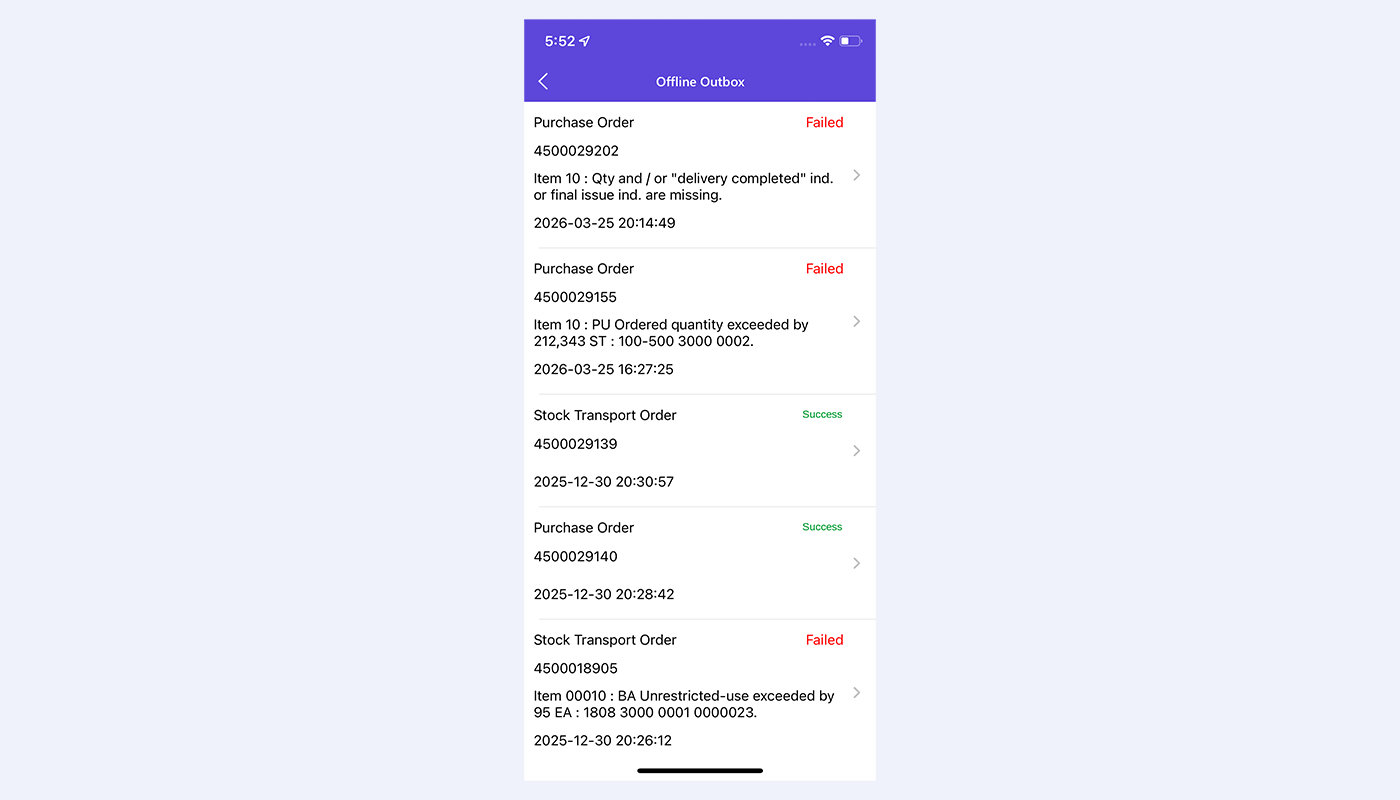
RapidSync™ · Offline
Full execution with zero connectivity
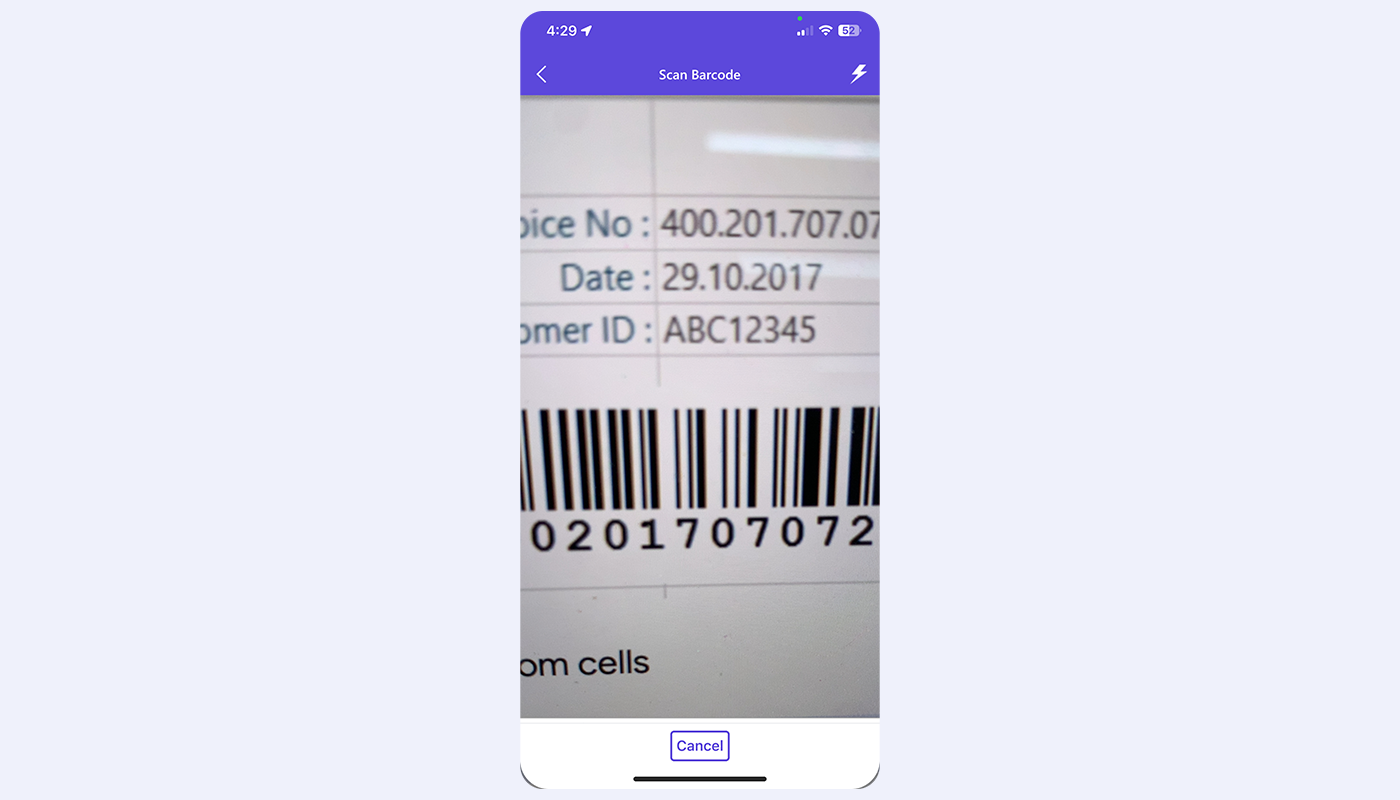
Combo Scan & Combo Bind
Fewer scans per transaction
Trusted by global process manufacturers
Core Capabilities
Warehouse Inventory Management Software That Covers the Full Receipt to Cycle Count Lifecycle
mInventory is built around the warehouse supervisor, the storeroom coordinator and the maintenance planner. Inbound, internal, outbound and field storage transactions all run in one native mobile app, from a control centre supervisors watch live. 90+ prebuilt transactions connect to SAP IM, WM and EWM on ECC and S/4HANA, IBM Maximo, Oracle and 50+ enterprise systems.
Spare Parts Control Center
Non-stocked material stops disappearing before the job.
A Kanban control centre tracks work order kitting in real time, with auto-assignment and bulk assignment of pickers and full visibility of stock and non-stock items together. MRO inventory management software has to account for parts that never enter a bin, which is where SAP has no native answer.
One operator clears several work orders in a single walk.
A picker works several orders in one pass instead of returning to the same aisle twice. Optimal route determination sequences putaway, picking and cycle counting by bin location, so the walk is planned before it starts. Single-order pick lists stop queuing behind one operator.
Multiple items are verified in a single scan action.
Combo Scan reads several barcode types at once, using the native device camera or any supported rugged scanner, and Combo Bind binds multiple barcodes together across receiving, issue, transfers and counting. GS1 standards are supported natively, and an RFID warehouse management system reads stock that cannot be reached by line of sight.
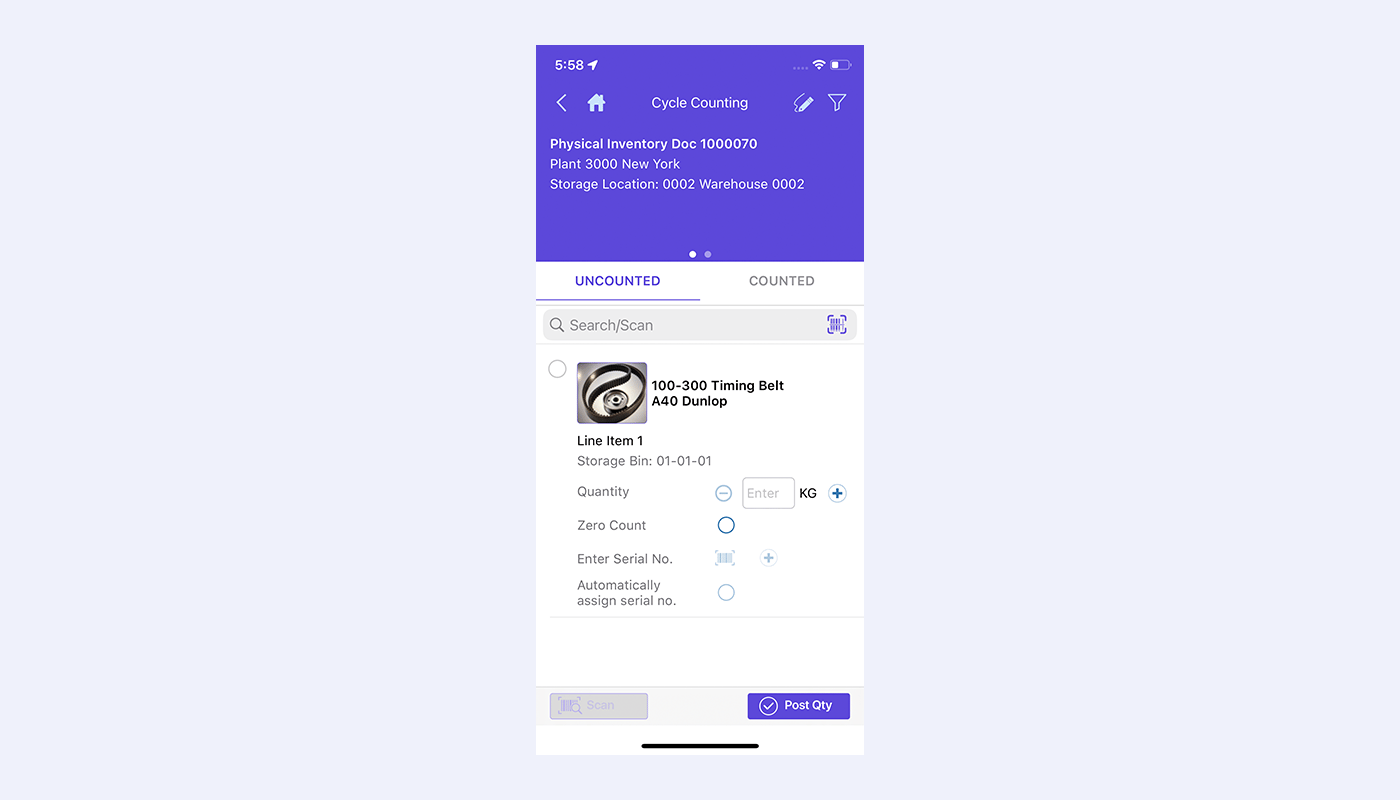
Material photo thumbnails from the SAP material master appear on screen during goods receipt, issue, picking and counting. OCR reads packing slips and bills of lading at the dock and attaches the image to the SAP material or document record in real time.
A mobile warehouse management system that works with no signal.
Mobile inventory management software runs the full transaction set natively on iOS and Android, in tank farms, remote mine stores and offshore platforms with no coverage. RapidSync reconciles automatically on reconnection, and user-preferred filters control what data the device holds.
Material stays visible across the final mile to site.
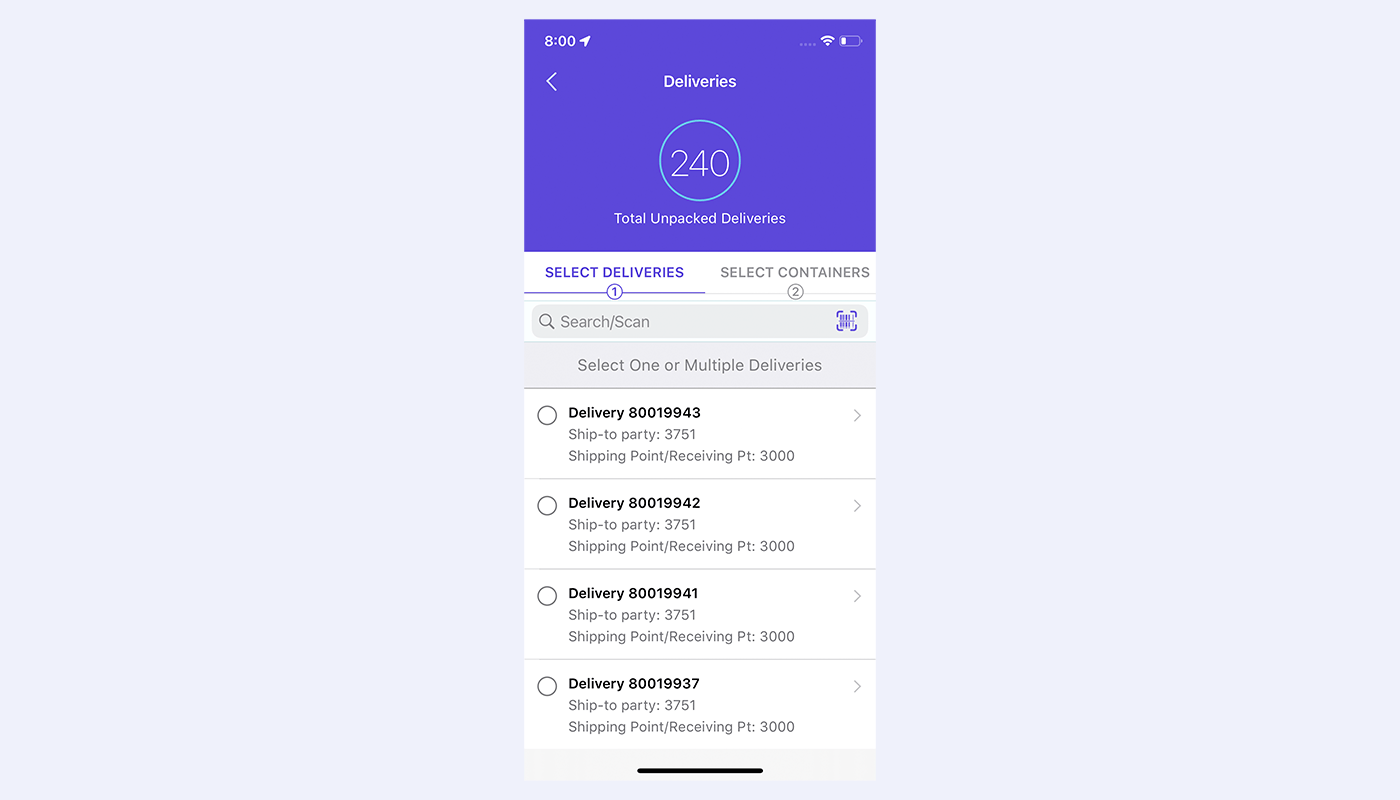
Five dedicated transactions cover container assignment, delivery packing, shipment receipt and returns for onshore-to-offshore and hub-to-site movement. The shipment is tracked as a controlled handover rather than disappearing between the central warehouse and the platform or remote camp.
How Warehouse Inventory Management Software Turns Every Movement Into Verified, ERP-Connected Work
This feature guide walks through barcode-verified capture at the bin, the Spare Parts Control Center for kitting and staging, label and scanner configuration, and connected posting to SAP IM, WM, EWM, Maximo and Oracle.
Warehouse inventory management software connects receipt, putaway, demand, kitting, execution and reconciliation in one sequence. mInventory closes that loop. A released work order becomes a staged, barcode-verified kit at the job site, and the goods movement posts to SAP before the technician starts.
STEP 1
Receive
Scan & OCR
Goods receipt is confirmed by scan against the purchase order, OCR captures the packing slip, and barcode labels print on the spot from a mobile or Bluetooth printer.
STEP 2
Put Away
Bin Verified
Bin assignment follows the optimal route, and the label is verified at the bin so the right material lands in the right location the first time.
STEP 3
Demand
Auto-Raised
Released work orders, reservations and minimum threshold breaches raise picking demand automatically, with no request ticket and no phone call to the storeroom.
STEP 4
Kit and Stage
Control Center
The Spare Parts Control Center assigns the picker, tracks kitting progress on a live board, and covers non-stock items alongside stocked material.
STEP 5
Issue
Signed Proof
Multi-order picking clears several work orders in one walk, and the issue is confirmed by digital signature and photo as proof of delivery.
STEP 6
Reconcile
Posted to ERP
Cycle counts, transfers and variances post to SAP, Maximo or Oracle in real time, and accuracy trends surface by bin and by material.
Offline end to end — receive, pick and count with no coverageEvery movement barcode-verified at the bin and posted as it happens
Built to plug into the systems you already run.
Bi-directional, pre-built integrations across historians, APM, MES/SCADA, EHS, and ERP/CMMS — so your investments in OT and IT keep compounding.
Innovapptive mInventory vs ERP-Only and Paper-Based Warehouse Inventory Management Systems
mInventory captures and posts every movement at the bin as it happens. That replaces the two ways most industrial stores run today: movements entered into ERP desktop screens once the operator is back at a desk, or written on paper and keyed in at the end of the shift. The gap between mInventory and ERP-only working is where inventory accuracy is won.
Capability
Innovapptive mInventory
ERP Screens Only
Paper and Spreadsheets
Data capture
Barcode-verified at the bin, posted live
Typed into a desktop screen after the fact
Written down, keyed in at shift end
SAP module coverage
IM, WM and EWM on mobile, 90+ transactions
IM, WM or EWM from a desktop
None
Warehouse visibility
Live control centre across all activity
Static reports, one day behind
Clipboard and whiteboard
Kitting and staging
Dedicated Spare Parts Control Center
Not supported
Printed pick note on a pallet
Picking method
Several orders per walk, bin-sequenced
One order per walk
One order per walk
Material verification
Material master photo on screen
Part number on screen
Part number read off a label
Working without network
Full offline transactions, automatic sync
Requires a connection
Nothing recorded until shift end
Label printing
Designed in RACE, printed on the go
Custom SAP label programs
Pre-printed or handwritten
Final-mile to remote sites
Remote Logistics Management
No visibility after issue
Phone calls and email
Hardware
30+ scanners, sleds and mobile printers
Fixed terminals
None
Customer Story
How Indorama Ventures Turned Connected Execution Into $50M in Annual Maintenance Savings
Indorama Ventures connected frontline execution across rounds, maintenance and plant operations to improve how teams detect, act on and close operational issues.
Mobile Inventory Management System Built for Stores, Planners and Plant Leadership
50%Productivity gain on small-order picking
See every open receipt, kit and count on one board.
The control centre shows kitting progress, picker assignment and open movements in real time, across stock and non-stock material. Pickers are assigned in bulk rather than one at a time. Bottlenecks surface during the shift instead of appearing as expedited freight the following week.
Stop losing non-stocked material before it reaches the job.
Non-stock items are tracked through the Spare Parts Control Center rather than sitting on a pallet with a printed note. Material photos from the SAP master confirm the right part on screen, and digital signatures record who took what, when, and against which work order.
Schedule against parts that are verified, not assumed.
Kits are prepared against the released work order and staged before the crew is dispatched. Parts readiness is visible before the week is committed, so planned jobs stop stalling at the tool box talk and repair time reflects the work rather than the search.
Release the working capital that inaccurate records are funding.
Accuracy at record level is what lets planners stop buffering. Barcode-verified movements post in real time, so the figure in the ERP is the figure in the bin. Excess stock comes out of the storeroom, and expedited freight stops covering the gap.
Add new SAP transactions without writing custom code.
mInventory layers onto SAP IM, WM and EWM on ECC or S/4HANA, IBM Maximo or Oracle. New screens, transactions and labels are configured in RACE rather than coded, so a process change does not queue behind a development cycle or create a per-site branch to regression test.
AI-Powered Warehouse Inventory Management, Connected to Your ERP
A personalized walkthrough covering your storerooms, your material types and your SAP, Maximo or Oracle environment, plus a custom inventory accuracy value brief. Thirty minutes with a value engineer.
Recognized as a Leader in Connected Worker Platforms
Frost & Sullivan named Innovapptive 2026 Company of the Year and a Leader in its Frost Radar™ for Augmented Connected Worker, End-to-End Platforms, based on platform breadth, AI execution capability, and measurable customer impact.
Frost & Sullivan Best Practices
2026 Company of the Year, Global Connected Worker Platforms
Frost & Sullivan recognized Innovapptive for closing the frontline execution gap with its end-to-end connected worker platform.
“Innovapptive has taken an innovative approach to AI, developing one of the most extensive AI agent portfolios available. These agents assist manufacturers with their maintenance, operations, reliability, safety, and analytics needs.”
Juan Francisco Dell'Era · Senior Research Analyst, Industrial Automation & Software, Frost & Sullivan
Resources
Must-Have Resources for Supply Chain and Maintenance Leaders
Featured Whitepaper
Best Practices for Kitting and Staging in MRO Warehouses
How MRO warehouses build a kitting and staging process that maintenance can schedule against, covering non-stock material control, picker assignment, staging discipline and the metrics that prove it is working.
Frequently Asked Questions About Warehouse Inventory Management Software
What is warehouse inventory management software?
Warehouse inventory management software digitizes the physical movement of stock: goods receipt, putaway, picking, issue, transfers and cycle counting. In industrial plants it also links those movements to maintenance work, so a released work order pulls the right spare from the right bin and posts the goods movement to the ERP immediately.
What is the difference between a warehouse inventory management system and WMS software?
WMS software was designed for distribution centres moving cartons at volume. A warehouse inventory management system for an industrial store handles critical spares against work orders, including non-stocked material, in plants where connectivity is unreliable. The differences that matter are ERP posting depth, offline execution and the link to maintenance planning.
Does inventory management software it integrate with SAP, IBM Maximo and Oracle?
mInventory integrates with SAP IM, WM and EWM on both ECC and S/4HANA, alongside IBM Maximo, Oracle and 50+ other enterprise systems through Integration Manager. Connections are bi-directional and real time. ERP system inventory management remains authoritative, and every mobile transaction posts back to it without rekeying.
Does mobile inventory management software work without connectivity?
Full offline execution is standard in the native mobile inventory management app on iOS and Android, including tank farms, remote mine stores and offshore platforms with no wireless infrastructure. OfflineConnect reconciles every transaction on reconnection, and user-preferred filters control what data the device holds.
Which scanners, printers and RFID hardware are supported?
Rugged scanners and sleds from Zebra, Honeywell, Socket Mobile, Cognex and Infinite Peripherals are supported out of the box, with GS1 barcode standards and mobile or Bluetooth label printers for on-the-spot printing. RFID material identification covers stock that cannot be reached by line of sight.
Does it support MRO inventory as well as raw materials and finished goods?
All three warehouse types are supported. MRO inventory management software carries an additional requirement that distribution tools do not: linking parts to work orders and reservations, and controlling non-stocked material that never enters a bin. The Spare Parts Control Center exists for that purpose.
Can it manage multiple plants and warehouses on one system?
Multi-warehouse and multi-plant operations run on a single configuration, covering plant-to-plant relocation, warehouse-to-warehouse movement and bin-to-bin transfers. The warehouse management system mobile app gives each site local execution while supervisors keep a consolidated view, which is what separates enterprise deployments from B2B inventory management software built for a single site.
What is the ROI of warehouse inventory management software?
The return on warehouse inventory management software begins with inventory accuracy above 99 percent, the operational KPI that everything else follows from. As parts availability stabilizes, buffer stock comes out of the storeroom and maintenance spend falls, reaching an EBITDA impact of 5 to 15 percent.
Is mInventory a full WMS software platform or a warehouse ERP software layer?
mInventory is warehouse ERP software in the sense that it runs on top of your ERP rather than replacing it. Where standalone WMS software keeps its own system of record and reconciles to the ERP in batch, mInventory posts every goods movement to SAP, Maximo or Oracle as it happens. Enterprise resource planning inventory management stays authoritative, and there is no second stock ledger to reconcile.
How is this different from the ERP warehouse management system we already run?
An ERP warehouse management system captures movements when the operator returns to a desktop screen, so the record lags the physical stock. mInventory captures and posts at the bin on a mobile device, including fully offline, so the figure in the ERP matches the figure in the bin in real time. It adds mobile execution and a live control centre to the ERP system inventory management you already own.
Does it support RFID, and is it a paperless warehouse solution?
mInventory is a paperless warehouse solution: receiving, putaway, picking, transfers and cycle counting are all captured on a mobile device with no clipboards or end-of-shift keying. As an RFID warehouse management system it reads tagged stock that cannot be reached by line of sight, alongside barcode and QR scanning through Combo Scan and Combo Bind.
Get Started
Ready to Give Maintenance a Stock Record It Can Schedule Against?
See how oil and gas, chemicals, mining and utilities operators use mInventory to raise inventory accuracy, remove pick errors and release working capital, all on the SAP, Maximo and Oracle systems they already run.

-2.webp?width=1446&height=1300&name=2g%20-%20MOBILE%20INVENTORY%20AND%20WAREHOUSE%20-%2020250416%20(3)-2.webp)