-
Platform
The #1 Platform Driving Frontline-First Digital TransformationConnected Worker PlatformLearn More
-
Product
Operations SuiteMaintenance SuiteWarehouse SuiteContinuous Improvement Suite
-
Solutions
By Business ChallengeBy Industry
- Resources
- Company
- Contact Us
Find What You Need, Instantly!

Your wrench time number may be an estimate. The lost capacity is real.
Work orders record when a job was released and confirmed. They rarely record the waits for job packs, parts, permits or area release in between.
Recorded
The system says the material exists.
Findable
The storeroom can locate the exact part.
Reserved
It is committed to the job that needs it.
Staged
The complete kit is waiting before work starts.
Issued
Movement and use return to the record.
The work order closes. The waiting does not show up.
A system of record knows when work was released and confirmed. It cannot see what happened inside those two timestamps.
One block of booked labour
The same hours, observed
Where does the shift go?
The studies split paid time three ways. Select a barrier below to see the handoff behind it and what changes the result.
No job pack
A released work order, often with little more than a short description.
The technician searches for scope, drawings or instructions, or the planner re-walks the job.
Make the job pack complete and available on the device before the schedule commits the crew.
Materials not staged
A reservation and, later, a goods issue. Rarely the wait between the two.
The crew walks to the storeroom, queues, or finds the kit incomplete at job start.
Kit and stage parts against the scheduled job before the week is locked.
Scheduling wait
Planned and scheduled dates. This is the one lag a record can compute.
Crews wait for an assignment, or work lands in a window it cannot fit.
Schedule only ready work, against realistic crew capacity and site windows.
Job-site preparation
Usually nothing. Area and equipment release is rarely captured on the order.
Access, scaffolding, the area or the equipment is not ready when the crew arrives.
Confirm access and equipment release as part of readiness, before dispatch.
Permit and lock waits
The permit lives in a separate system, not on the work order.
The crew waits at the control room for a permit, isolation or lockout to clear.
Prepare permits and isolations with the work package, visible before release.
Behaviour and idle time
Nothing that separates idle time from waiting on someone else.
The smallest of the six categories in these studies.
Investigate after the readiness barriers are removed. Do not assume the cause.
Source: three day-in-the-life stopwatch studies of mechanical and I&E technicians at one Gulf Coast chemicals site. The 22, 34 and 44 split is normalized to an eight-hour shift. The six totals add to 369 coded minutes across all three studies. Site-specific, not an industry average.
See which of these barriers is costing your plant the most.
Most avoidable loss is created before the technician reaches the asset.
Each stage asks one readiness question. When a stage passes unready work forward, paid time keeps running at the asset.
Prepare the job
Are scope, work pack and instructions ready?
→Schedule ready work
Is there a realistic window and crew capacity?
→Stage material
Are the required parts picked and ready?
→Release the work
Are permits, isolations and area access ready?
→Execute and learn
Do actual labour, parts and failure details return?
Improving wrench time means removing these queues, not asking people to work faster.
Improve the work around the technician.
Tools and training matter. Their reach is limited while jobs still arrive without parts, instructions, permits or release.
Useful, but bounded
- ✓Better tools and equipment at the job
- ✓Skills training and craft flexibility
- ✓Tighter supervision and shift discipline
- ✓Digital forms replacing paper
Remove the reasons work stops
- →Complete job packs and instructions before release
- →Parts kitted and staged against scheduled work
- →Permits and isolations cleared before the crew arrives
- →Only ready work reaches the schedule
The strongest wrench-time gain is often a planning, materials or permit improvement, measured at the asset.
How Innovapptive puts more hours on the tools.
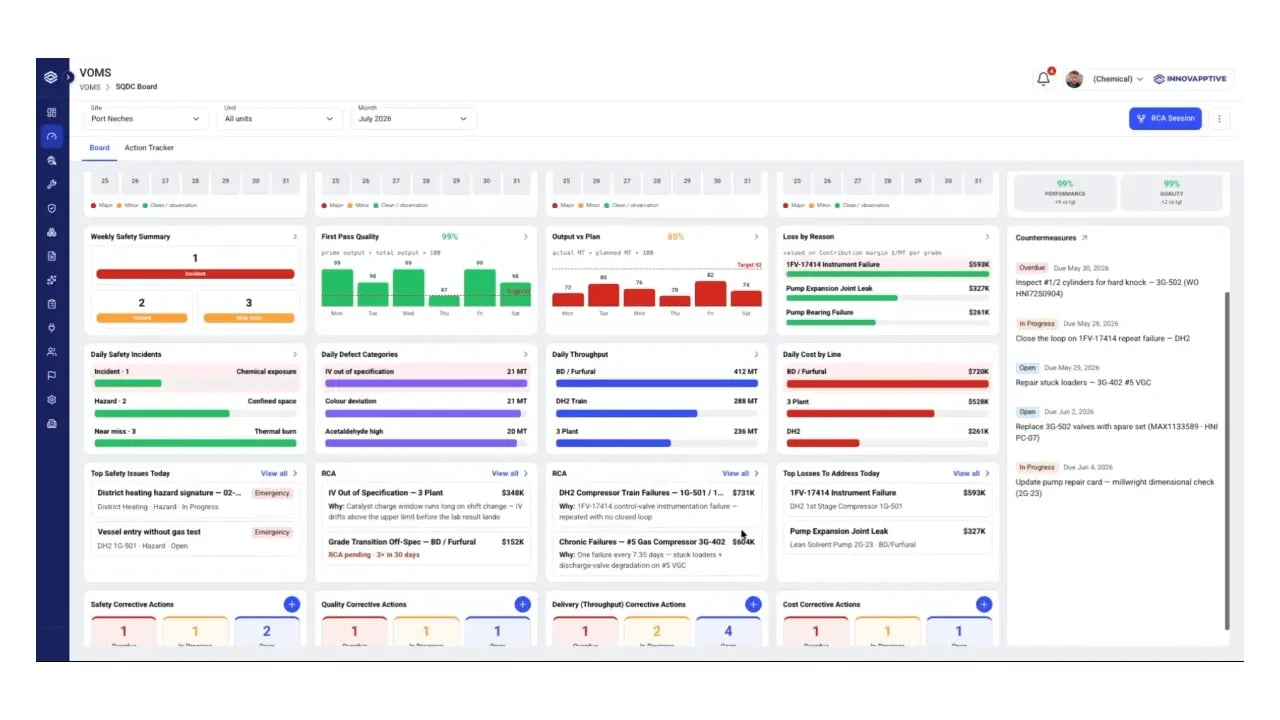
Technicians lose hours to travel, paperwork and waiting on parts and permits. Innovapptive connects daily management, planning, permits and mobile maintenance, so the shift is spent on the work.
Daily Management for Maintenance
The Digital Daily Management System gives maintenance one daily huddle on live data. It shows what is ready, what is blocked and who owns each fix, with SQDC and wrench time on the same board.
Crews leave the huddle with ready jobs, not open questions. Blockers get an owner and a date before they cost a shift.
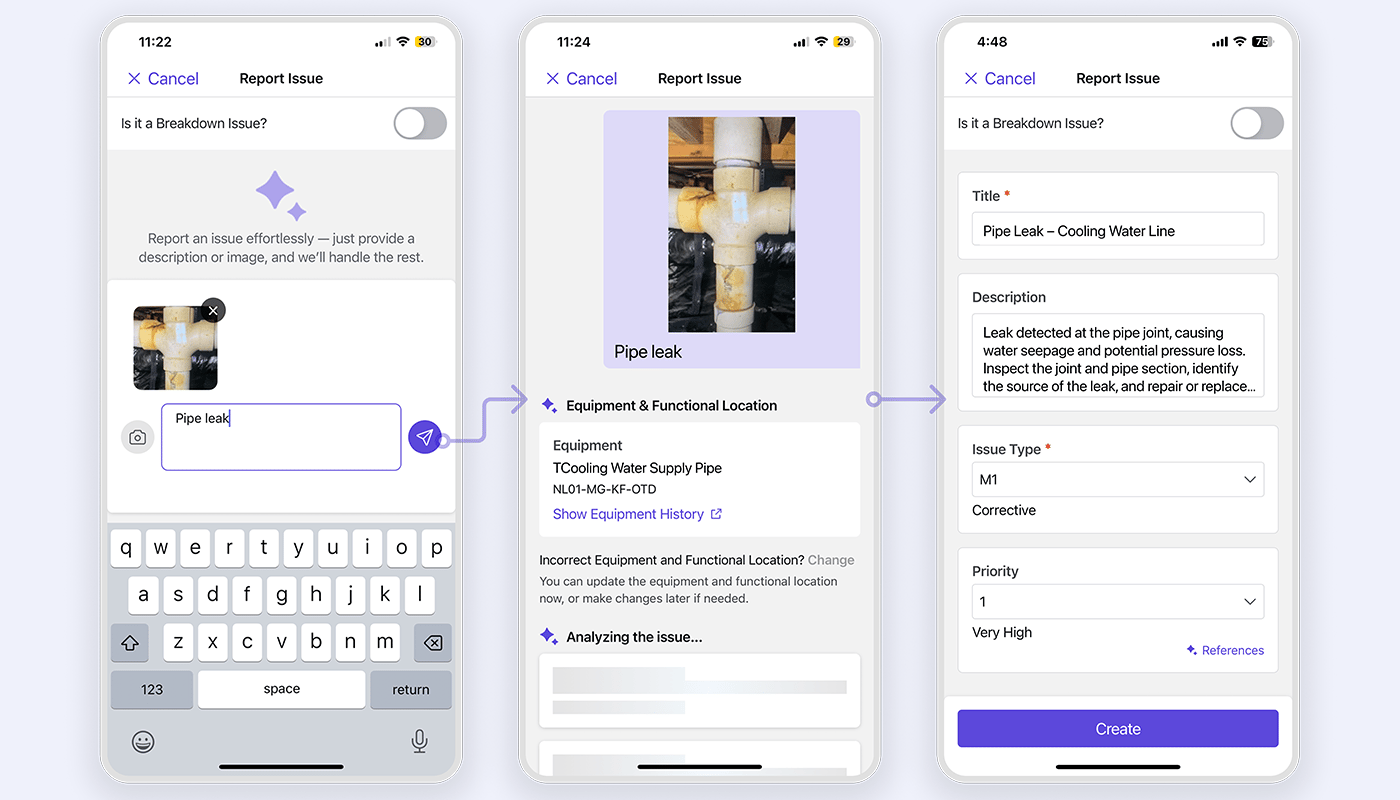
The complete job in the technician's hand.
Work order, task list, asset history, drawings and procedures are on mobile, online or offline. Everything stays synced with SAP, IBM Maximo or Oracle EAM.
No trips back to the shop for paperwork or manuals. Time and findings are captured as the job happens.
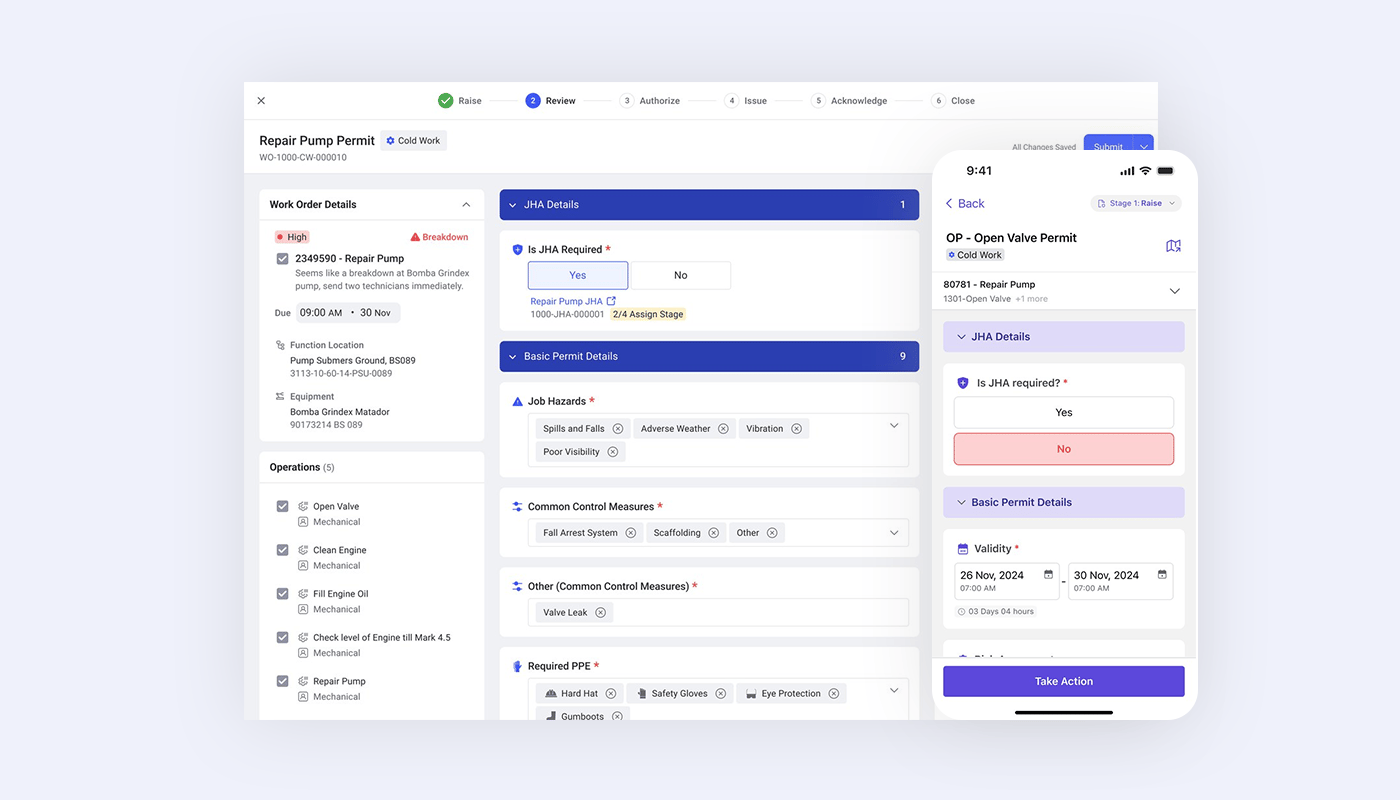
Permits ready when the crew is.
Permits prepares the permit, job hazard analysis and isolations alongside the work package. Crews are not left waiting at the control room.
Permit status is visible before the job is released. Approvals happen on mobile, at the work site.
- Teams work on the losses that cost the most.
- Countermeasures are tracked until the fix is verified.
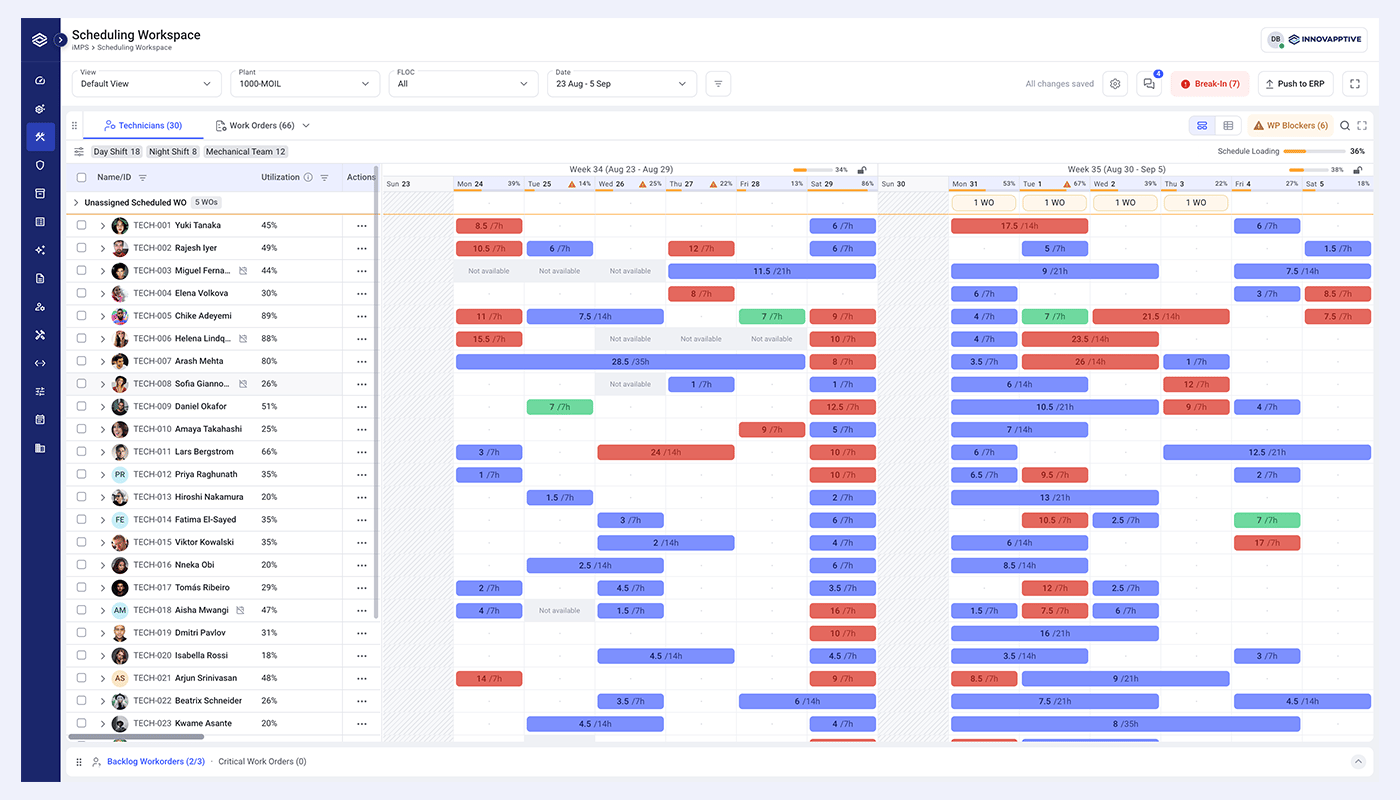
Parts kitted, jobs sequenced, no waiting.
AI Planning & Scheduling sequences jobs by location and readiness and has parts kitted ahead. Technicians move from one ready job to the next.
Less travel between jobs. No mid-job trips to the storeroom.
Bring the expert to the job.
Huddles connects technicians to experts by chat, photo, video and live calls, right from the job.
Solve problems at the asset, not after a callback. Evidence stays attached to the work order.
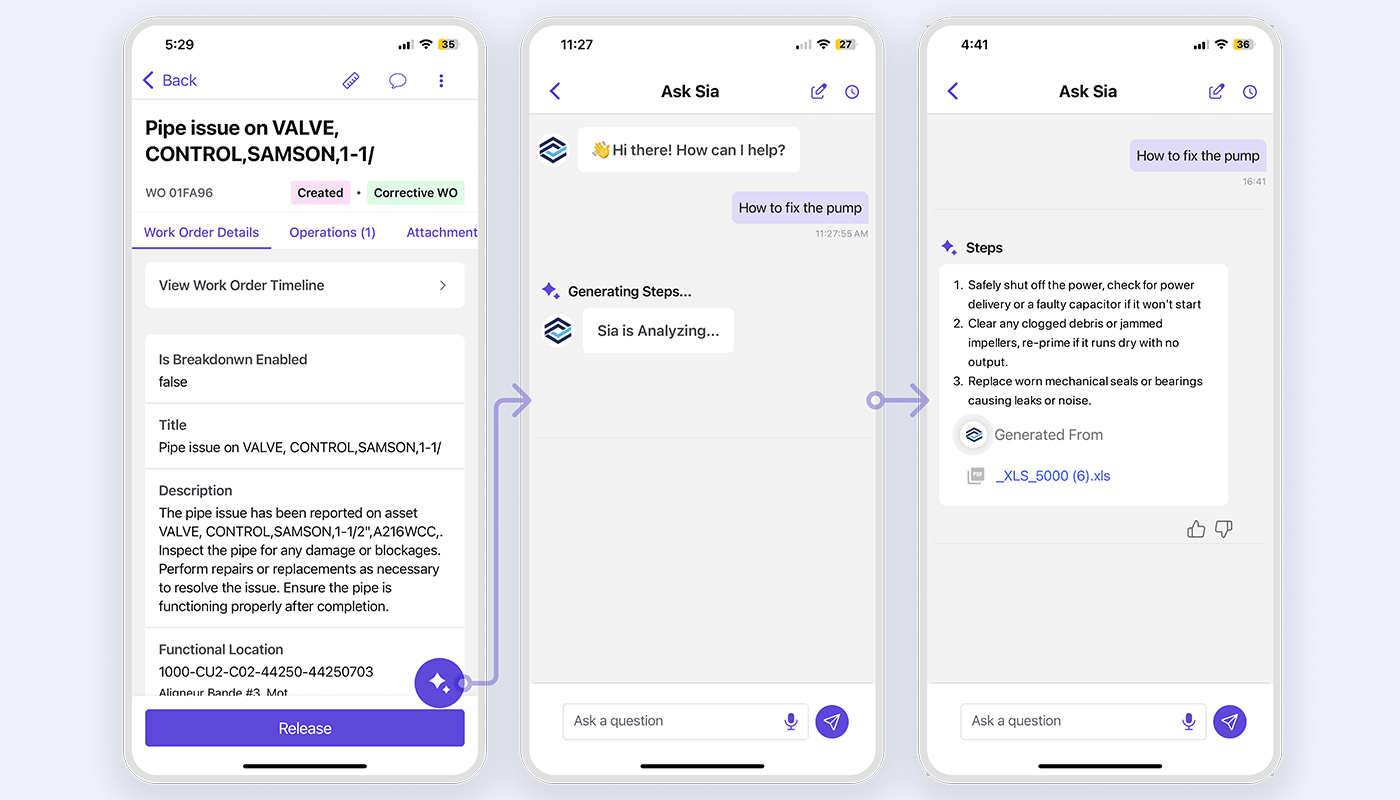
Take wrench time from the estimate to the asset.
The Guide to Improving Wrench Time shows maintenance and plant leaders how to remove the waits between release and confirmation.
What happened when execution was connected at Indorama
Innovapptive connected frontline execution to the systems already in place, digitised paper work orders, and closed the reactive gap, without adding headcount.
Digital transformation works when it’s driven from the frontline—giving operators the power to improve execution and protect margin.
Mark Holden
Chief Manufacturing and Technology Officer
Indorama Ventures
See how the site got there, step by step.
Read the Indorama storyFind out what your wrench-time number leaves out.
Your records show the job. The Margin Walkthrough shows where work waits on the way to the asset, then prices the gap.
Understand
We review your maintenance and operating data to establish what the records show.
Observe
Two days on the floor tracing how work is prepared and where people wait.
Quantify
We connect the verified gap to productive capacity, execution delay and spend.
Prioritize
You receive a Margin Improvement Report with the barriers to address first.
Recognized as a Leader in Connected Worker Platforms
Frost & Sullivan named Innovapptive 2026 Company of the Year and a Leader in its Frost Radar™ for Augmented Connected Worker, End-to-End Platforms, based on platform breadth, AI execution capability, and measurable customer impact.

2026 Company of the Year,
Global Connected Worker Platforms
Frost & Sullivan recognized Innovapptive for closing the frontline execution gap with its end-to-end connected worker platform.
Get the Report→
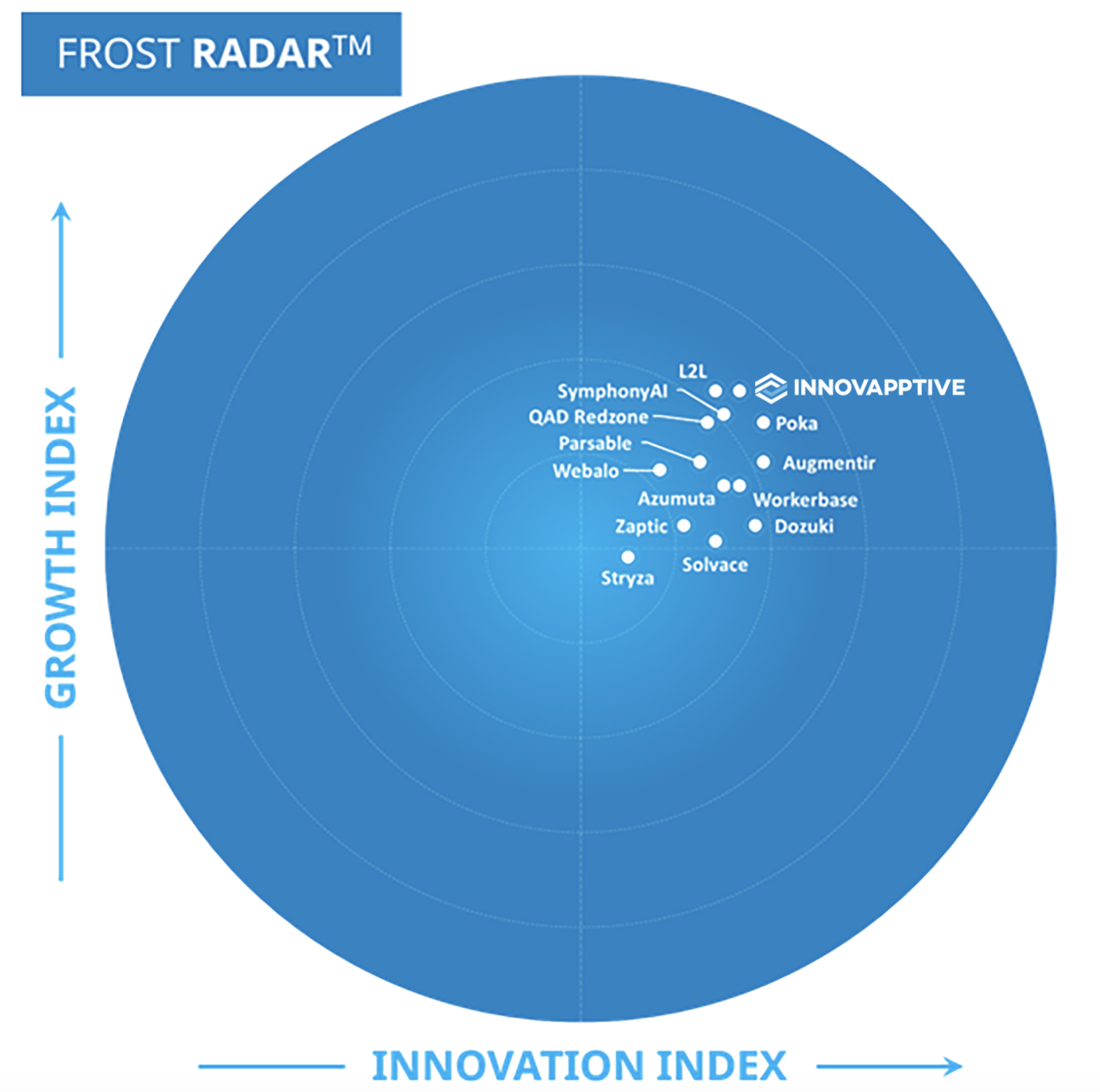
A Leader in Augmented
Connected Worker Platforms
Positioned as a Leader for connected worker platforms based on innovation, growth performance & proven enterprise scalability.
Get the Report→“Innovapptive has taken an innovative approach to AI, developing one of the most extensive AI agent portfolios available. These agents assist manufacturers with their maintenance, operations, reliability, safety, and analytics needs.”
Measure the gap, not the people.
Your records show the job. The floor shows what it takes to get it done. Book a Margin Walkthrough to see where work waits and what that waiting costs.
Questions operations leaders ask.
Not reliably. Those systems record start, finish and labour entries, but rarely the waits inside them. A record-derived estimate is not the same as observed time on tools.
No. Utilization shows whether a technician is assigned to work. Wrench time shows how much paid time reaches the asset. A full schedule can still produce low wrench time.
No. In the cited studies, missing job packs, unstaged materials and scheduling waits were the largest categories. The diagnosis examines the work system and its handoffs, not individual effort.
We review your operating data, observe how work moves on the floor, quantify the gaps and rank them. You keep the Margin Improvement Report whether or not you continue.
No. Innovapptive connects frontline execution to SAP, IBM Maximo or Oracle EAM. Your enterprise system remains the record for work and assets.