
What Are Toolbox Talks?
A toolbox talk is a short, focused safety meeting held at the worksite before a shift or a specific task begins. It runs 5 to 15 minutes and covers one safety topic relevant to the work happening that day. The aim is simple: make sure every worker understands the specific hazards, the controls and the safe method before they start.
Toolbox talks go by many names. You may know them as safety talks, tailgate meetings, pre-job safety briefings, safety moments or shift huddles. The label changes by industry and region, but the purpose is the same. It is a brief, practical conversation that puts safety front and center before work begins.
Unlike formal training, which may happen once or twice a year, toolbox talks happen often, usually daily or weekly. That repetition is the point. Safety awareness fades. A short, regular talk keeps it sharp.
Why Toolbox Talks Matter: 7 Reasons
Toolbox talks are one of the highest return safety practices available to an industrial operation. They take minutes, cost almost nothing, and directly reduce the incidents that shut a plant down. Here are the seven reasons they matter.
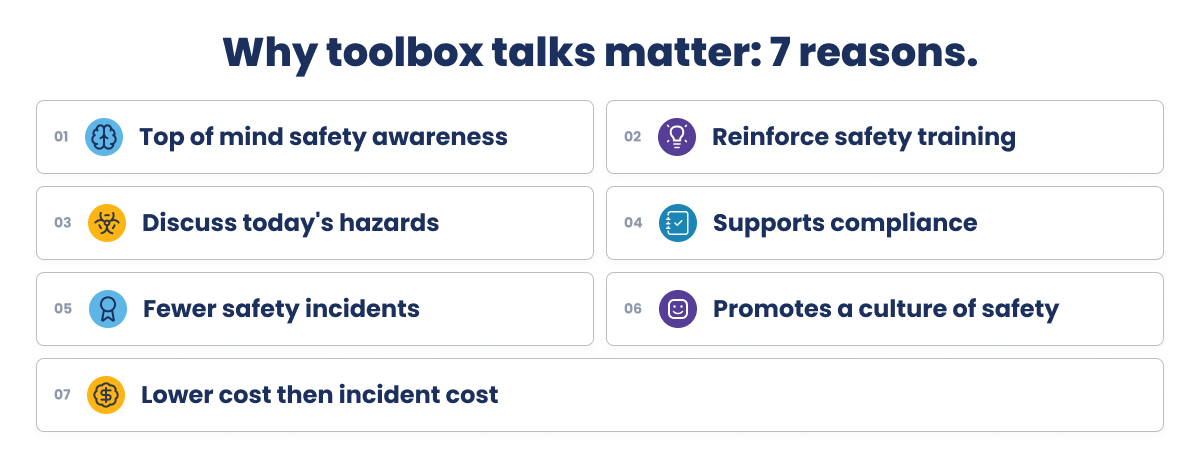
1. They keep safety top of mind
The biggest risk on a mature site is complacency. Workers who have done a task a thousand times stop seeing its hazards. A short talk at the start of the shift resets that awareness. A two minute reminder about isolation this morning does more than a training course did six months ago, because it lands at the moment it matters.
2. They reinforce formal training in real conditions
Classroom training covers the rules. A toolbox talk applies them to today's reality. A worker may have passed confined space training last year, but a talk before entry reminds the crew that this vessel, this atmosphere and this weather change how those rules apply. Training is the foundation. The talk keeps it live.
3. They surface the specific hazards of today's job
Plant conditions change daily. A new contractor crew arrives. A unit comes down for turnaround. Two jobs end up running side by side. Toolbox talks let a supervisor call out the hazards that are specific to today, including simultaneous operations (SIMOPS) risks that a static procedure would never capture.
4. They support compliance and audit readiness
Under the Occupational Safety and Health Administration (OSHA) General Duty Clause, employers must provide a workplace free from recognized hazards, and that includes informing and training workers on the risks they face. A documented toolbox talk, with the date, topic and attendance, is direct evidence of that effort. During an audit or an incident investigation, that record is what proves due diligence.
5. They reduce incidents and injuries
This is the outcome that matters, and the data is clear that frequency drives results. In its 2019 Safety Performance Report, Associated Builders and Contractors (ABC) found that companies holding daily toolbox talks reduced their total recordable incident rate (TRIR) by 85 percent compared with those holding them only monthly. Moving from weekly to daily talks alone was linked to a 73 percent lower TRIR.
6. They build a real safety culture
Culture is not built by posters. It is built by what happens every morning. When a supervisor runs a talk each day and asks the crew what they are seeing, it tells everyone that safety is how work is done here, not a box to tick. Over time, this is what gets workers to speak up about a hazard, report a near miss, and hold each other to the standard.
7. They cost almost nothing compared with an incident
A toolbox talk needs no special equipment, no outside trainer and no dedicated room. It costs a few minutes of crew time. Set that against the cost of a single serious incident, which includes lost production, equipment damage, regulatory fines, higher insurance and the human cost, and the return is enormous.
Put together, these are the reasons regulators, insurers and safety leaders treat the toolbox talk as a core safety practice rather than a nice to have.
See how frontline safety is going digital
Toolbox talks, permits and hazard checks are moving off paper and into a single frontline execution platform. See what that shift looks like and why it matters for plant safety and productivity.
Common Toolbox Talk Topics
The best topic is the one that matches the work in front of the crew. Pick one topic per talk, keep it specific, and tie it to today's tasks and permits. In asset heavy operations, these topics come up most often:
- Personal protective equipment (PPE): correct selection, inspection and fit for the task
- Lockout/tagout (LOTO): the control of hazardous energy before work begins
- Confined space entry: gas testing, ventilation and rescue readiness
- Hot work: welding, cutting and grinding near flammable material
- Working at height: fall protection, anchor points and ladder safety
- Line breaks: the safe release of stored pressure or product
- Hazardous substance handling: chemical exposure, labeling and spill response
- Simultaneous operations (SIMOPS): conflicting work in the same area
- Manual handling and ergonomics: safe lifting and repetitive strain
- Incident and near miss review: a recent event on your own site
Rotate topics so they stay relevant to the season, the current turnaround and the specific hazards your crews face. A talk about heat stress belongs in July, not January.
How to Run an Effective Toolbox Talk
A talk only works if the crew stays with it. These six steps keep a toolbox talk short, relevant and useful.
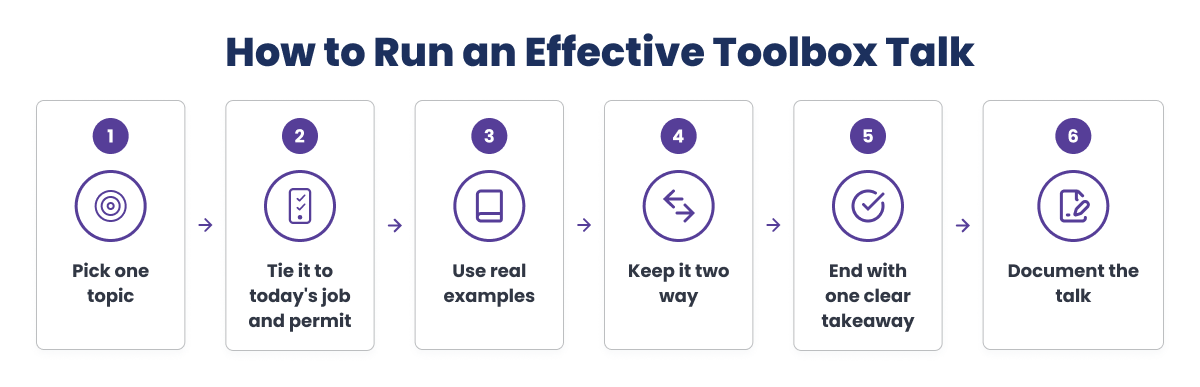
- Plan and pick one topic: Choose a single topic tied to the day's work, a recent incident or an upcoming high risk task. One clear subject beats a broad overview.
- Tie it to today's job and the permit: Connect the talk to the actual tasks, the job hazard analysis (JHA) and any permit to work in play. The crew should see how the topic applies to what they are about to do.
- Use real examples: Start with a near miss from your own site or a real incident from the industry. Concrete stories land where abstract rules do not.
- Keep it two way: Ask questions. Invite the crew to name hazards they are seeing. Workers who take part remember more and act on it.
- End with one clear takeaway: Give the crew a single action to hold onto, such as verify isolation before you open that line. Not a list of ten things they will forget by lunch.
- Document the talk: Record the date, topic, presenter and attendance. This is required for compliance and it is what protects the company during an audit or investigation.
The 15 AI agents powering frontline work
See how AI Permits, AI JHA and AI PPE Check take the manual work out of permits, hazard analysis and PPE checks across safety, maintenance and operations.
Common Mistakes That Undermine Toolbox Talks
Even a well intended safety program falls flat when talks are run badly. These are the most common mistakes to avoid.
- Reading a script with no eye contact: If the presenter just reads a sheet, the crew tunes out. Use it as a guide and speak in your own words.
- Covering too many topics at once: One topic per talk. Cramming three in means the crew retains none of them.
- Skipping talks when the schedule is tight: This is the most damaging habit. Skipping a talk tells the crew that safety is optional when work gets busy.
- Using irrelevant topics: A talk that has nothing to do with today's hazards wastes everyone's time and trains the crew to ignore the next one.
- Not documenting attendance: If it is not recorded, it did not happen as far as a regulator is concerned.
- No follow through: If a worker raises a hazard and nothing changes, participation dries up. Close the loop on what the crew reports.
How Often Should Toolbox Talks Be Held?
For crews doing physical, higher hazard work, daily is the standard to aim for. A short talk every morning before work starts gives the strongest reinforcement, and the incident data backs it up. At a minimum, hold toolbox talks weekly. Any less frequent and the reinforcement effect fades. Many operations vary the depth, running a quick two minute reminder most days and a longer 5 to 10 minute talk once a week on a specific topic.
Where Toolbox Talks Connect to Permit to Work and High-Risk Jobs
In a process plant, the toolbox talk is rarely a standalone event. It is the verbal front end of a controlled workflow that also includes the JHA, the permit to work (PTW), isolation and LOTO, and PPE verification. The talk is where the crew hears the hazards out loud. The permit is where those hazards, controls and approvals are enforced before the job is allowed to start.
The problem on most sites is that these steps live in different places. The toolbox talk happens on the floor. The permit sits on paper or in a separate system. The JHA is a form signed from memory. When they are disconnected, a hazard named in the morning talk can still slip through, because nothing links it to the control that manages it.
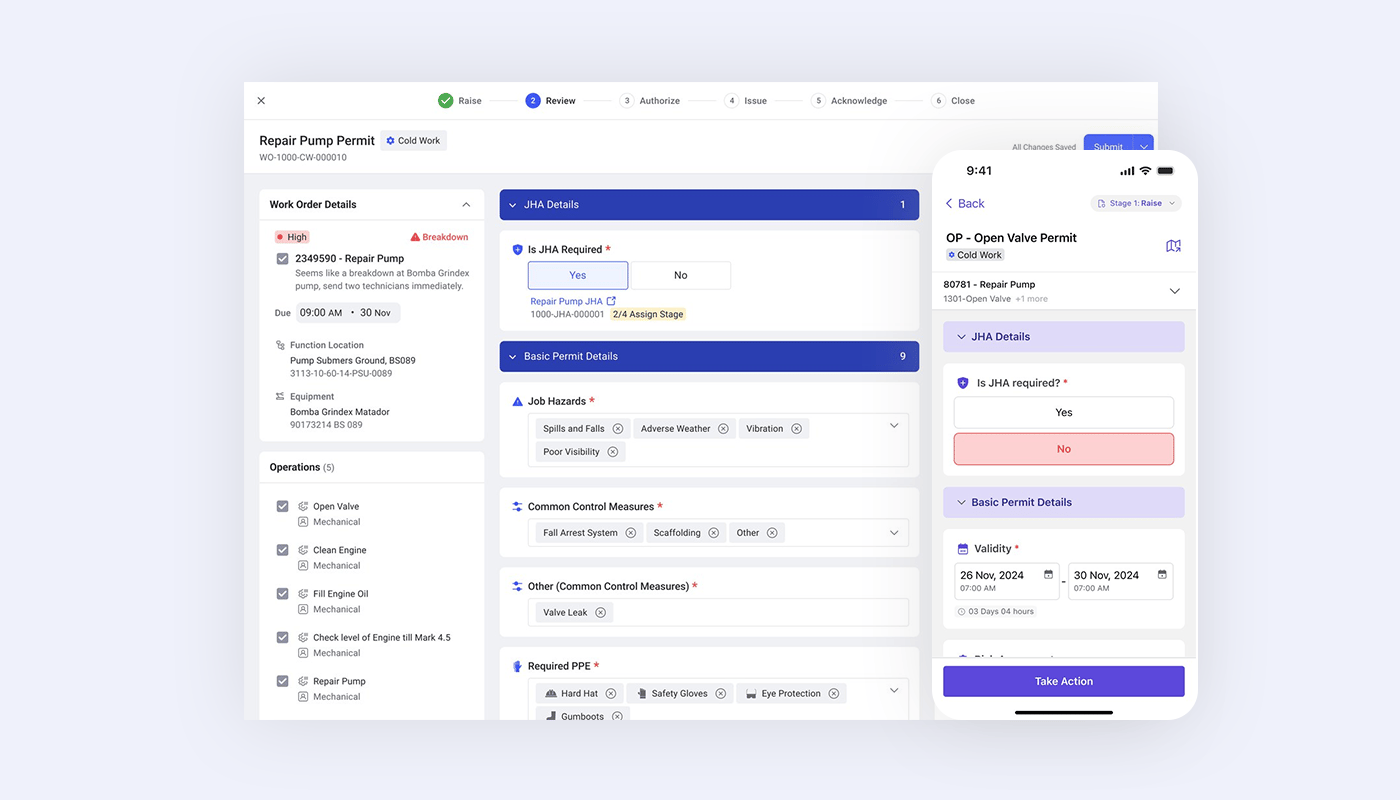
Closing the gap between the safety conversation and the controlled job is where digital tools change the outcome. When the talk, the permit, the JHA and the PPE check run as one connected flow, the hazard a supervisor raises at 7 am is the same hazard the permit holds the job against at 7:30. You can see how that end to end flow works on Innovapptive's electronic permit to work software.
Take control of high-risk work
See how leading plants raise a compliant permit in under 2 minutes, verify isolation and PPE before work starts, and keep every high risk job audit ready.
Why Innovapptive for Digital Toolbox Talks and Frontline Safety
Innovapptive is a connected worker platform and industrial execution platform built for asset heavy industries. It digitizes the full frontline safety workflow, from the toolbox talk and digital topic library through the permit to work, the JHA, isolation and the PPE check, on mobile and offline. Here is what that means for a safety leader.
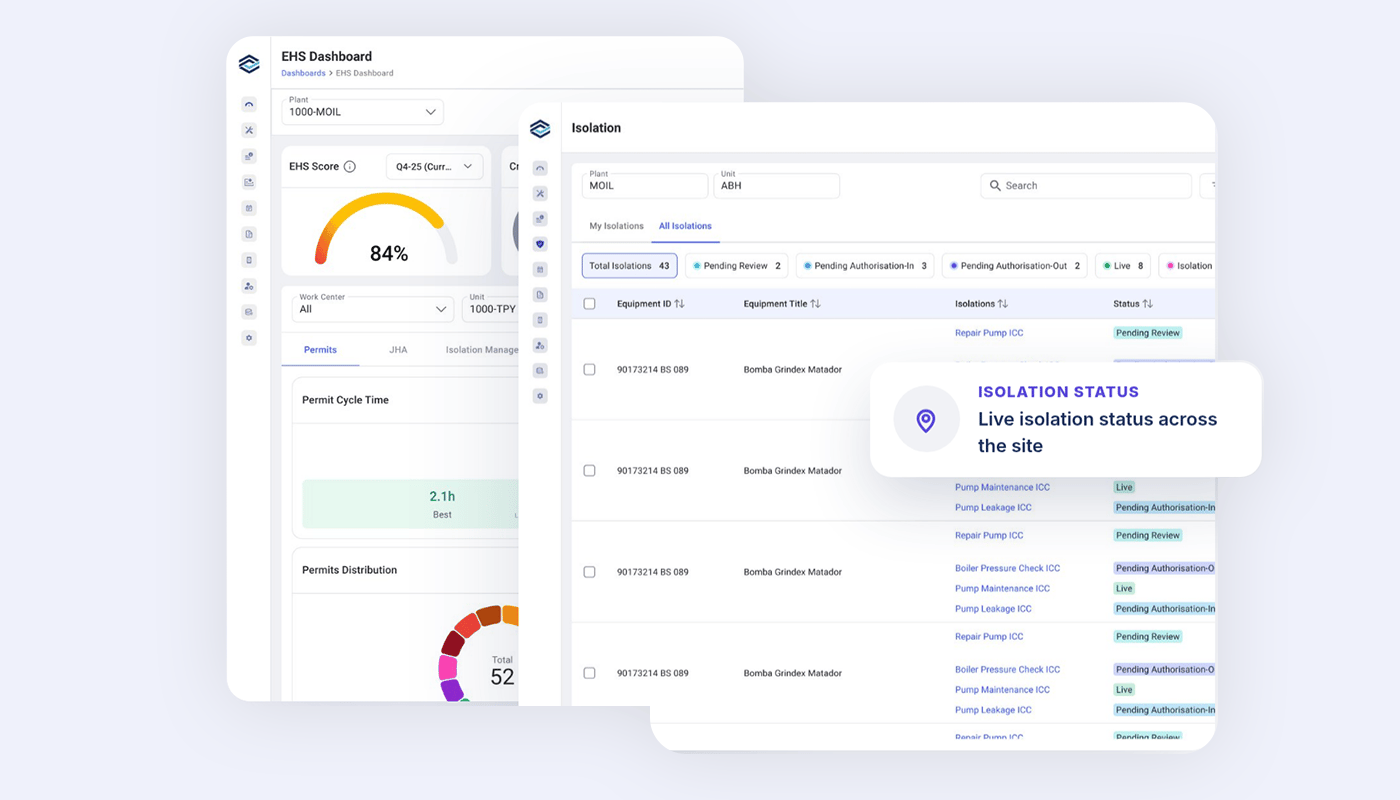
One connected flow, not disconnected forms
The toolbox talk, permit, JHA, isolation and PPE check run as a single governed workflow, so the hazards raised in the talk are the ones enforced on the permit. Safety becomes part of how work is executed rather than a set of records reconciled afterward. That is the core of how Innovapptive helps teams mitigate safety risks across a site.
A digital topic library with real participation tracking
Teams pull from prebuilt, industry specific safety topics or upload their own, and leaders see participation and completion across teams and sites in real time, rather than chasing paper sign in sheets.
AI agents that remove the manual steps
Named AI agents, including AI Permits, AI JHA and AI PPE Check, draft the permit, the hazard analysis and the PPE verification. Issuers and supervisors spend less time on paperwork and more on the work and the crew.
Built to work where your crews work
The platform runs offline in hazardous areas and remote installations through RapidSync , and it integrates with SAP and IBM Maximo (supported), so safety records sit with the work order rather than in a separate silo.
See connected frontline safety in action
See how chemicals, oil and gas, mining and power generation teams run toolbox talks, permits, JHAs and PPE checks as one connected workflow, on the SAP and Maximo systems they already run.
In Conclusion
Toolbox talks work because they put the right hazard in front of the right people at the right moment, every day, for almost no cost. Done consistently, they cut incidents, satisfy regulators and build a culture where crews look out for each other. The plants getting the most from them are the ones that no longer treat the talk as a standalone huddle. They connect it to the permit, the JHA and the controls, so the safety conversation carries all the way through to how the job is executed and recorded. That is the shift from talking about safety to running it.
Unlock Margins Hidden in your Maintenance
Watch how leading manufacturers improve OEE, increase PM compliance, and reduce downtime through connected execution.
- 05-10-2026
10 Best Shift Handover Software Platforms for Plant and Process Operations
Shift handover software can mean different things depending on the operating environment. Some...
- 29-09-2026
Best SAP Maintenance Planning & Scheduling Software 2026
Your maintenance work orders live in SAP Plant Maintenance (PM), while the working schedule lives...
- 28-09-2026
Best Work Order Software: Top 9 Platforms Compared
Selecting the best work order software is a different decision for a large industrial plant than...