
Connected Worker Guide: Benefits, ROI & Use Cases
By 2030, the manufacturing sector faces a severe talent headwind: an estimated 2.1 million manufacturing jobs are projected to go unfilled as experienced workers retire, taking decades of irreplaceable institutional knowledge with them (Deloitte and The Manufacturing Institute, 2021). Compounding this skills gap is a staggering operational drain: Fortune 500 companies lose $1.4 trillion every year to unplanned downtime, almost 11% of their total revenue (Siemens, The True Cost of Downtime 2024). With regulatory scrutiny simultaneously tightening across the chemical, oil and gas, and energy sectors, enterprise leaders are no longer debating whether to digitize the shop floor, they are racing to do it before the next breakdown, audit, or retirement wave hits.
The organizations pulling ahead are doing so with a comprehensive connected worker strategy. By equipping frontline teams with real-time data, AI-guided work instructions, and seamless ERP connectivity right at the point of work, industrial enterprises are successfully transforming the last mile of field execution into a measurable engine for EBITDA growth.
This comprehensive guide offers a blueprint defining what a connected worker is, how connected worker solutions integrate within existing IT/OT ecosystems, which industrial sectors benefit most, and how to evaluate the right solution for your operation.
What Is a Connected Worker?
A connected worker is a frontline industrial employee equipped with mobile and IoT-enabled digital tools that provide real-time access to ERP data, digital work instructions, and remote expert collaboration. This integration eliminates information silos, ensures safety compliance, and maximizes productive wrench time across maintenance, operations, and EHS functions.
Unlike traditional digital transformation initiatives that focus on enterprise systems, the connected worker model places technology directly in the hands of the technician or operator — at the point of work, in real time.
What Is a Connected Worker Platform?
A connected worker platform is a unified digital software solution that integrates people, processes, and enterprise data to enable frontline workers in industrial environments to execute tasks more safely, efficiently, and accurately. It goes beyond a mobile app or standalone workflow tool. Where traditional maintenance management systems are siloed point solutions that focus only on asset data, a connected worker platform creates an integrated digital thread across the entire frontline workforce.
Connected Worker in the Manufacturing Industry
Manufacturing is one of the most asset-intensive industries in the world, and it is under compounding pressure from aging workforces, rising equipment complexity, and tightening regulatory requirements. The connected worker model was built to address exactly these conditions.
In a manufacturing context, a connected worker is a technician, operator, maintenance professional, safety and EHS team member, or reliability engineer who is digitally linked to the assets they maintain, the systems that govern their work, and the colleagues they depend on, all in real time. According to latest studies, manufacturers with digitized frontline operations outperform their peers on asset utilization, safety compliance, and workforce productivity, all of which compound into measurable EBITDA impact.
Transform Your Connected Worker Strategy into a High-Impact EBITDA Growth Engine.
Discover how to bridge execution gaps that cause technicians to lose 3 to 5 hours every day by unifying operations, maintenance, & warehouse execution on a single platform.
Get Free Value Creation PlaybookTypes of Connected Workers
The term connected worker covers a broad range of frontline roles across industrial environments. Understanding which worker types benefit most from connected technology helps enterprise buyers scope their deployment correctly and prioritize the highest-impact workflows first.
Maintenance Technicians
The highest-impact connected worker role in asset-heavy industries. Maintenance technicians use mobile work orders, digital work instructions, and offline-capable tools to execute preventive and corrective maintenance faster, with fewer errors, and with real-time SAP integration that eliminates duplicate data entry.
Operations and Process Operators
Operators conducting equipment rounds, shift handovers, and production monitoring benefit from structured digital checklists, real-time asset readings from IoT sensors, and standardized shift handover workflows that replace unreliable verbal communication with auditable digital records.
Safety and EHS Personnel
EHS workers managing permits, inspections, and incident reporting gain digital ePTW workflows, automated LOTO verification, and structured incident capture tools that enforce compliance at the point of work rather than relying on memory and paper forms after the fact.
Warehouse and Inventory Technicians
Warehouse workers managing MRO inventory, spare parts kitting, and goods receipt use mobile barcode scanning, real-time SAP EWM integration, and digital picking workflows that replace paper-based processes prone to error and delay.
Reliability and Inspection Engineers
Reliability engineers conducting inspections, root cause analyses, and failure investigations use AI-powered RCA tools, structured inspection workflows, and historical failure data to identify patterns faster and recommend corrective actions with greater accuracy.
How Connected Workers Support Digital Transformation
Most enterprise digital transformation initiatives focus on systems of record, ERP implementations, cloud migrations, data lake consolidations. These are critical investments, but they have a significant blind spot: they never reach the frontline worker.
A connected worker platform closes this gap. It serves as the execution layer of digital transformation, the mechanism by which the data and intelligence that lives in SAP, IoT platforms, and analytics systems is made actionable for the frontline workforce executing the actual work.
From Data Collection to Real Time Decision Support
Traditional digital transformation generates data. Connected worker technology operationalizes it. When a sensor detects an anomaly, the connected worker platform translates that signal into a mobile work order with AI-guided diagnostic steps, delivered to the right technician before the failure occurs.
From Point Solutions to Unified Frontline Execution
Many plants have invested in CMMS, EAM, IoT sensors, and EHS software, but these systems operate in silos. A connected worker solution integrates all of them into a single mobile experience for the frontline worker, eliminating the context-switching and manual data transfer that creates errors and delays.
From Tribal Knowledge to Institutional Memory
One of the most underestimated benefits of connected worker technology in the context of digital transformation is knowledge capture. Digital work instructions, AI-guided procedures, and structured shift handover workflows encode the expertise of experienced workers into repeatable, searchable, scalable assets, ensuring institutional knowledge survives workforce transitions.
Key Benefits of Connected Workers
When industrial operations move away from static, isolated processes and truly empower their frontline staff with digital visibility, the impact can be felt across the entire value chain. By transforming traditional, paper-bound roles into highly informed, connected workers, asset-heavy enterprises unlock massive gains in efficiency, reliability, and safety.
Here is how empowering connected workers transforms performance across the modern plant floor:
- Minimized Unplanned Downtime: Armed with real-time analytics and predictive insights, connected operators and technicians spot equipment anomalies early. Instead of reactively firefighting unexpected breakdowns, field teams execute proactive maintenance adjustments at the point of work before an asset failure can disrupt the production line.
Also, read: Cost of Unplanned Downtime
- Maximized Wrench Time and Field Productivity: Connected workers complete their shifts without being bogged down by administrative overhead, hunting for paper binders, or sitting through duplicate data entry at a desk. Mobile workflows and robust offline access ensure field personnel have technical data, history, and asset diagrams immediately at their fingertips, keeping their focus entirely on high-value execution.
- Safety and Continuous Compliance: By embedding high-risk workflows like Permit to Work (PtW) and Lockout/Tagout (LOTO) directly into digital devices, connected frontline workers follow precise safety protocols as a natural part of their shift. They perform automated verification steps and generate a transparent, real-time audit trail.
- Preserved and Transferred Tribal Knowledge: When senior operators become connected workers, they can easily capture institutional wisdom via dynamic, media-rich digital work instructions. This ensures critical, unwritten operational knowledge is seamlessly encoded into repeatable workflows, protecting the enterprise from knowledge attrition when senior staff retire.
- Data-Driven Frontline Visibility: Connected workers continuously generate end-to-end process data as they execute tasks throughout the facility. This gives plant managers and operations leaders live visibility into key performance metrics like OEE, MTTR, and backlog tracking based on actual field reality, rather than reliance on historical data.
- Proactive Error Identification & Resolution: Digital assistance and guided workflows act as an inline quality assurance coach for connected workers during complex inspection or maintenance steps. If a technical error or a missed step occurs, immediate system feedback allows the operator to perform corrective actions instantly, preventing defects before they escape to downstream operations.
- Instant Communication & Cross-Functional Collaboration: Every minute matters when a machine fails or an operational constraint arises. Connected workers use real-time digital communication directly from their mobile devices to instantly call for support, log notifications with rich media attachments, and collaborate seamlessly across shifts to resolve facility bottlenecks.
- Accelerated Onboarding and Improved Talent Retention: A digitally enabled floor helps bridge the skills gap by shortening onboarding cycles for new hires, allowing them to perform advanced tasks sooner and with total confidence. Furthermore, a modern digital workplace satisfies the expectations of incoming generations, helping manufacturing operations boost overall job satisfaction and reduce frontline turnover.
Also, read: How to Reduce Maintenance Costs: Eight Proven Strategies
Seven Key Connected Worker Technologies
Understanding the underlying technology stack allows enterprise leaders to move beyond digital checklists and build a resilient, scalable operation. A mature connected worker solution isn't just an app; it is a sophisticated ecosystem composed of these critical layers:
Mobile-First Frontline Applications
Work in the field requires more than just a responsive website. True frontline execution relies on native mobile applications optimized for iOS, Android, and ruggedized industrial devices. By leveraging built-in hardware capabilities, such as high-speed barcode scanning, computer vision for part identification, and voice-to-text, these apps turn a mobile device into a powerful tool that eliminates manual entry and lets workers focus on the task at hand.
IoT Integration Layer
A modern platform acts as the bridge between the worker and the machine. By ingesting real-time data from sensors, PLCs, and SCADA systems, the platform provides technicians with live equipment readings directly within their digital work instructions. This connected visibility ensures that workers aren't just following a static manual, but are responding to the actual, real-time health of the asset.
AI and Machine Learning
Beyond simple data collection, the connected worker stack must include an intelligence layer that anticipates problems before they occur. AI-driven failure prediction models and automated work order prioritization transform the platform from a passive tool into a proactive coach. Instead of just populating a report, the system surfaces actionable insights, like Root Cause Analysis (RCA) suggestions, at the exact moment a worker needs to make a decision.
Offline Data Sync
Offline data sync is a non-negotiable capability for plants with connectivity constraints. Full offline functionality ensures workers can access instructions, record data, and complete work orders in dead zones, with automatic sync when connectivity is restored. In industrial settings, offline must be a standard operating mode rather than an error state. This allows technicians to complete their entire shift without interruption, while bidirectional synchronization ensures your ERP is updated the moment they re-enter range, eliminating the need for manual workarounds or duplicate data entry back at the desk.
ERP and EAM Integration
To be effective, the frontline cannot operate in information silos. Deep, prebuilt integrations with systems like SAP PM, IBM Maximo, or Oracle ensure that real-time data is reflected. This eliminates dual data entry and ensures that asset records, inventory levels, and maintenance schedules remain accurate across the entire enterprise.
Augmented Reality (AR) and Extended Reality (XR)
Complex maintenance and remote commissioning require more than text-based steps. By integrating Augmented Reality (AR), the technology stack allows for remote expert guidance and digital twin overlays. This provides workers with immersive, step-by-step visual instructions that significantly reduce the margin for error in high-risk or highly technical environments.
Electronic Permit to Work (ePTW) and EHS Workflows
Safety should be baked into the technology, not added as an afterthought. Digitizing the Electronic Permit to Work (ePTW) and EHS workflows allows the platform to automate critical safety checks, such as LOTO (Lockout/Tagout) verification and risk assessments. By linking permit status directly to the work order, the system ensures that work cannot begin until every safety protocol is verified and approved.
Frost & Sullivan Names Innovapptive a Leader in the 2025 Frost Radar™ for Augmented Connected Worker Platforms.
Get the breakdown on: ACW trends, innovation vs. Growth benchmarking , Innovapptive’s AI strengths, and actionable industrial best practices.
Access Full ReportReal-World Example: Indorama Ventures
Indorama Ventures, a global chemical leader, faced significant value leakage at its Port Neches, Texas facility due to paper-based and reactive maintenance processes. By deploying Innovapptive's Connected Worker Platform, the site bridged the gap between IT systems and frontline execution, transforming their maintenance culture from reactive to predictive.
The implementation focused on mobile-first digitization of work orders, operator rounds, and inventory management to create real-time connectivity between workers and assets. The results within the first 12 months include:
| Key Performance Indicator | Performance Improvement |
|---|---|
| Realized EBITDA Savings | $29M annual maintenance savings |
| Maintenance Backlog | Reduced from 24 weeks to 10 weeks |
| Maintenance Overtime | Halved from 24% to 12% |
| Inventory Accuracy | Increased from 89.5% to 99.5% |
| Contractor Headcount | 38% reduction in contractor dependency |
Estimating Your Connected Worker ROI
Before committing a budget to a connected worker solution, operational leaders and plant heads need a clear overview on the quantifiable benefits that can be realised. Using the Indorama Ventures deployment as a calibration anchor, the actual results help us to understand how connected worker solutions provide real-time benefits across various value levers:
ROI Lever 1: Wrench Time Improvement
Industry average wrench time is 25 to 35% of a technician's shift. Connected worker platforms typically drive this to 45 to 55%. For a plant with 100 maintenance technicians at $60/hour fully loaded:
- Baseline: 30% wrench time = 30 productive hours per technician per week
- Post-deployment: 48% wrench time = 48 productive hours per technician per week
- Gain: 18 additional productive hours × 100 technicians × $60 = $108,000/week in recovered productivity
ROI Lever 2: Unplanned Downtime Reduction
At an upward of $260,000 per hour in lost production (Siemens, "The True Cost of Downtime," 2022), even a single prevented unplanned outage pays for months of platform subscription. Plants typically see 20 to 35% reduction in unplanned downtime events within 12 months of deployment.
ROI Lever 3: Overtime Reduction
Indorama Ventures reduced overtime from 24% to 12%, a 50% reduction. For a 100-person maintenance workforce, cutting overtime by 12 percentage points at $90/hour overtime rate equates to significant annual savings.
ROI Lever 4: Inventory Accuracy
Moving inventory accuracy from 89.5% to 99.5% (Indorama benchmark) directly reduces emergency procurement costs, eliminates duplicate stock purchases, and frees working capital tied up in excess MRO inventory.
ROI Lever 5: Contractor Dependency Reduction
Indorama reduced contractor dependency by 38%, eliminating significant external labor spend by empowering internal technicians to execute more work per shift. This is often the single largest ROI lever for chemical and petrochemical plants.
Cut Contractor Dependency by 38% and Reclaim Your Maintenance Budget.
See the exact strategy used to double PM-to-CM ratios and boost parts availability to 95% by connecting every technician in real time.
Download Case StudyConnected Worker Use Cases by Industry
Connected worker platforms deliver measurable impact across asset-heavy industries. Some use cases of connected workers across industries are as follows:
Oil & Gas
Upstream and downstream oil & gas operations face extreme safety requirements, remote worksites, and highly complex equipment. Connected worker addresses this via:
- Digital ePTW and LOTO for hazardous area work authorization, eliminating paper permit queues that delay production by hours.
- Offline-capable mobile work orders for offshore platforms and remote pipeline inspection sites with no reliable connectivity.
- AR-guided maintenance for subsea equipment where specialized expertise is scarce and mistakes are catastrophic.
- Real-time H2S and gas detection integration with automated evacuation alerts pushed to worker mobile devices.
Chemicals and Petrochemicals
Chemical plants operate under strict Process Safety Management (PSM) requirements, with OSHA 29 CFR 1910.119 mandating detailed documentation of hazardous operations. Key connected worker use cases are as follows:
- Digital management of change (MOC) workflows that replace paper-based change approval chains with real-time routing and digital signatures.
- Automated audit-ready inspection records for equipment subject to PSM, eliminating the risk of missing or illegible paper logs.
- Integrated PtW and LOTO with automatic cross-reference to active PSM process hazard analysis (PHA) findings.
Utilities and Power Generation
Power generation and utilities operate critical infrastructure where a single outage event can affect hundreds of thousands of customers. Connected worker technologies support:
- Predictive maintenance on turbines, transformers, and switchgear, reducing forced outage frequency and duration.
- Digital round management for distributed substations, with GPS-tracked completion and photo verification.
- Compliance-grade inspection documentation for NERC CIP and FERC regulatory requirements.
Manufacturing
Discrete and process manufacturers use connected worker technologies to close the gap between ERP-level planning and shop floor execution:
- Preventive maintenance execution with mobile work orders that pull real-time asset history and parts availability from SAP PM and MM.
- Digital quality inspection and non-conformance reporting linked directly to production work orders.
- Shift handover workflows that standardize knowledge transfer across three-shift operations, reducing post-handover incidents and repeated troubleshooting.
Common Implementation Challenges
Even well-planned connected worker deployments encounter predictable obstacles. Here are the five most common implementation challenges and proven strategies for addressing each one before they derail your rollout.
Resistance to Change on the Shop Floor
Frontline workers are often skeptical of new technology, particularly if previous digital initiatives added complexity without reducing their workload. The solution is early involvement: include technicians and operators in workflow design workshops before configuration begins. When workers see their own feedback reflected in the platform, adoption rates increase significantly.
ERP Integration Complexity
Bidirectional SAP integration is the most technically demanding component of a connected worker deployment. Avoid vendors who offer generic API connections. Look for SAP-certified, prebuilt connectors that have been tested against your specific SAP version (ECC, S/4HANA) and module configuration (PM, MM, EWM). A proven integration reduces go-live risk substantially.
Connectivity Gaps in the Plant
Dead zones in warehouses, confined spaces, and remote areas are a standard reality in industrial environments. Select a connected worker solution that supports true offline-first architecture, where workers can complete full work order cycles without any network connection, with automatic sync on reconnection.
Data Quality and Master Data Readiness
Connected worker platforms surface data from SAP and other systems, but if asset master data, work order templates, and inventory records are incomplete or inconsistent, the platform amplifies those problems rather than solving them. Plan a focused master data cleanup sprint before go-live, prioritizing the assets and processes included in your pilot scope.
Sustaining Momentum After Go-Live
Many deployments achieve strong pilot results but lose momentum during the scale-out phase. Designate a connected worker champion at each site — a senior technician or operations lead who owns adoption, captures feedback, and coordinates with the vendor on workflow updates. This role is a proven predictor of long-term deployment success.
Best Practices for Selecting a Connected Worker Solution
When mapping out your connected worker roadmap, use these comprehensive validation principles to ensure your investment drives immediate field adoption and sustainable EBITDA gains:
Start with the Problem, Not the Platform
Before issuing an RFP or scheduling demos, document your three to five highest-cost operational pain points with quantified baselines across key metrics such as current wrench time percentage, average downtime hours per month, overtime spend, and inventory accuracy rate.
Conduct a workflow audit across maintenance, operations, and EHS to identify where paper-based processes, information silos, and communication breakdowns create the highest cost and risk. Prioritize by downtime impact and safety exposure. Use these as your evaluation criteria. The platform that best addresses your specific pain points beats the platform with the most features every time.
Prioritize Frontline AI Over Back-Office Reports
Avoid deployments that confine artificial intelligence to corporate management reports. To effectively combat the industry's $1.5 trillion unplanned downtime crisis, AI must act as a live coach on the floor. Enterprises should look for specialized industrial AI that embeds real-time failure alerts, symptom-triggered root-cause suggestions, and automated work order planning directly into mobile apps right at the machine.
Test Offline Functionality in a Real Dead Zone
Never accept a software demo conducted on a stable conference room Wi-Fi network. Industrial environments are defined by remote structures and hazardous containment areas where connectivity fails. Your connected worker solution must treat "offline" as a standard operating state, not an exception. During your proof of concept (POC), physically test the software in your plant's deepest dead zones. Field personnel must be able to create, execute, and close complex work orders or safety permits fully offline, relying on automatic, bidirectional synchronization to update the ERP the moment they re-enter range.
Insist on Deep, Bidirectional ERP and EAM Integration
Do not settle for basic, read-only API connections that leave critical information stuck in data silos. Your solution must seamlessly sync with existing systems like SAP and IBM Maximo to manage work order lifecycles, inventory tracking, and asset details automatically. True operational ROI comes from linking real-time frontline execution directly to back-office records without requiring manual data reconciliation.
Prioritize No-Code / Low-Code Workflow Configuration to Lower TCO
Connected worker expenses extend far beyond per-user license fees; the true cost driver is long-term developer dependency. Modern industrial operations require constant workflow adaptations to meet shifting regulatory and maintenance constraints. Insist that vendors perform a live, no-code configuration change during your evaluation session to match a realistic scenario from your plant floor. Selecting a flexible, low-code architecture allows operations teams to modify workflows in hours, dramatically reducing your three-year TCO.
Assess Total Cost of Ownership Beyond License Fees
Connected worker platform costs extend well beyond per-user license fees. Evaluate: ERP integration setup costs, ongoing integration maintenance, training and change management, mobile device management, and the internal IT resource requirement for workflow updates. A platform with higher license fees but zero IT dependency on configuration changes may have a lower three-year TCO than a cheaper alternative that requires developer involvement for every update.
Demand a Defined Deployment Playbook Backed by Identical Industry Context
A solution built for generic discrete manufacturing will fail when subjected to the strict regulatory and continuous-flow complexities of process industries like chemicals, oil and gas, or mining. Review the vendor's implementation playbook to evaluate their timeline to go-live and verify pilot success metrics. Most importantly, demand reference calls with active enterprise customers operating in your exact vertical, running your identical version of SAP, to verify integration stability and past user adoption rates.
Ensure Multi-Site Scalability with Stringent Corporate Security
A successful single-site pilot is meaningless if the underlying architecture cannot scale globally. The strategy must accommodate multi-plant deployments with centralized workflow governance, multi-language support, and precise role-based access control for operators, technicians, and warehouse clerks. Simultaneously, guard your operational data by verifying enterprise-grade compliance, including SOC 2 Type II certification, robust encryption at rest and in transit, and immutable audit trails.
Five Connected Worker Trends Shaping 2026 and Beyond
AI-Enabled Frontline Assistants
The next generation of connected worker platforms moves beyond static work instructions to AI agents that actively assist during task execution, answering technical questions, flagging safety deviations, and recommending next steps based on real-time sensor data. Think of it as an experienced senior technician available to every worker on every shift.
Predictive and Prescriptive Maintenance at Scale
AI models trained on historical failure patterns, operating conditions, and maintenance records are moving from prediction (this asset will fail in 14 days) to prescription (here is the specific component to replace, the optimal maintenance window, and the parts you will need).
Connected Worker + Digital Twin Integration
Live operational data from the connected worker layer is being fed into plant digital twins, enabling engineering teams to simulate maintenance scenarios, test process changes, and validate safety procedures virtually before execution on the plant floor.
Augmented Reality for Remote Expert Collaboration
AR-assisted maintenance — where an off-site expert can see exactly what the on-site technician sees and overlay digital guidance — is becoming standard for complex, infrequent maintenance tasks and for bridging the skills gap created by workforce retirements.
Workforce Augmentation
As experienced workers retire, connected worker platforms are becoming the institutional memory of the plant. AI systems trained on captured tribal knowledge, combined with AR-guided procedures, allow a less experienced workforce to perform at the level of a 20-year veteran.
Why Industrial Leaders Choose Innovapptive Connected Worker Platform
Many frontline solutions are designed as basic mobile entry forms or rigid IT extensions that fail to account for the unpredictable, high-stakes reality of industrial operations. To help your team evaluate the market and select the right architecture for enterprise scale, the table below maps out the core capability gaps across the three primary solution categories:
| Capability | Point Solution (mobile app only) | ERP Extension | Innovapptive Connected Worker Platform |
|---|---|---|---|
| ERP Synchronization | Manual data entries or basic, read-only API connections. Asynchronous, batch-delivered logs prone to data lag and sync conflicts. | Asynchronous, batch-delivered logs prone to data lag and sync conflicts. | SAP-Native Execution: Bidirectional, certified integration with SAP records and EAM systems to handle transactions automatically. |
| Offline Capability | Completely disabled or restricted to limited, read-only views in the field. | Caches basic text fields but drops data and media attachments in remote areas. | RapidSync™ Offline Mode: True offline-first architecture built to run seamlessly at the industrial edge with automatic sync upon reconnection. |
| Frontline AI Support | Non-existent or confined entirely to back-office corporate dashboards. | Generic, cloud-dependent commercial LLMs that lack context. | WorkSmartAI™: Over 15 purpose-built AI agents delivering real-time failure alerts and root-cause analysis right at the machine. |
| EHS & Safety Workflows | Isolated safety apps that force technicians to manage disconnected tools. | Rigid text forms attached statically to work packages without real-time compliance gates. | Unified Execution Safety: Native electronic permit-to-work (ePTW) and safety gates woven directly into core maintenance workflows. |
| Workflow Configuration | High-code environments requiring custom vendor development sprints. | Complex, IT-governed scripting that creates long backlog delays for minor changes. | RACE™ Configuration Engine: A flexible, no-code environment allowing operations teams to customize workflows in days. |
| Multi-Site Scalability | Site-locked apps that break corporate data standardization. | Rigid, top-down configurations that ignore individual plant-floor realities. | Enterprise Scalability: Centralized multi-plant rollout capabilities combined with localized, role-specific frontline workflows. |
By unifying maintenance, safety, and inventory execution on a single pane of glass, Innovapptive eliminates the data silos that traditionally fragment industrial operations. Recognized by Frost & Sullivan as a leader in the 2025 Frost Radar™ for Augmented Connected Worker Platforms, Innovapptive shifts manufacturing operations from reactive to predictive, helping global enterprises eliminate execution waste, drastically reduce maintenance backlogs, and unlock $30M+ EBITDA gains.
Experience the Only Connected Worker Platform Built for $50M+ in Savings.
Master frontline execution with Innovapptive’s 15 purpose-built AI Agents.
Watch Product Tour
FAQs
Asset-heavy process and discrete industries see the highest ROI: chemicals, oil & gas, mining and metals, power generation, and manufacturing. Any operation relying on frontline technicians, paper-based workflows, or manual ERP data entry is a strong candidate.
A focused pilot covering two to three high-impact workflows can be live within 8 to 12 weeks. Enterprise-wide rollout across multiple sites typically spans 6 to 12 months, depending on ERP integration complexity and the number of workflow configurations required.
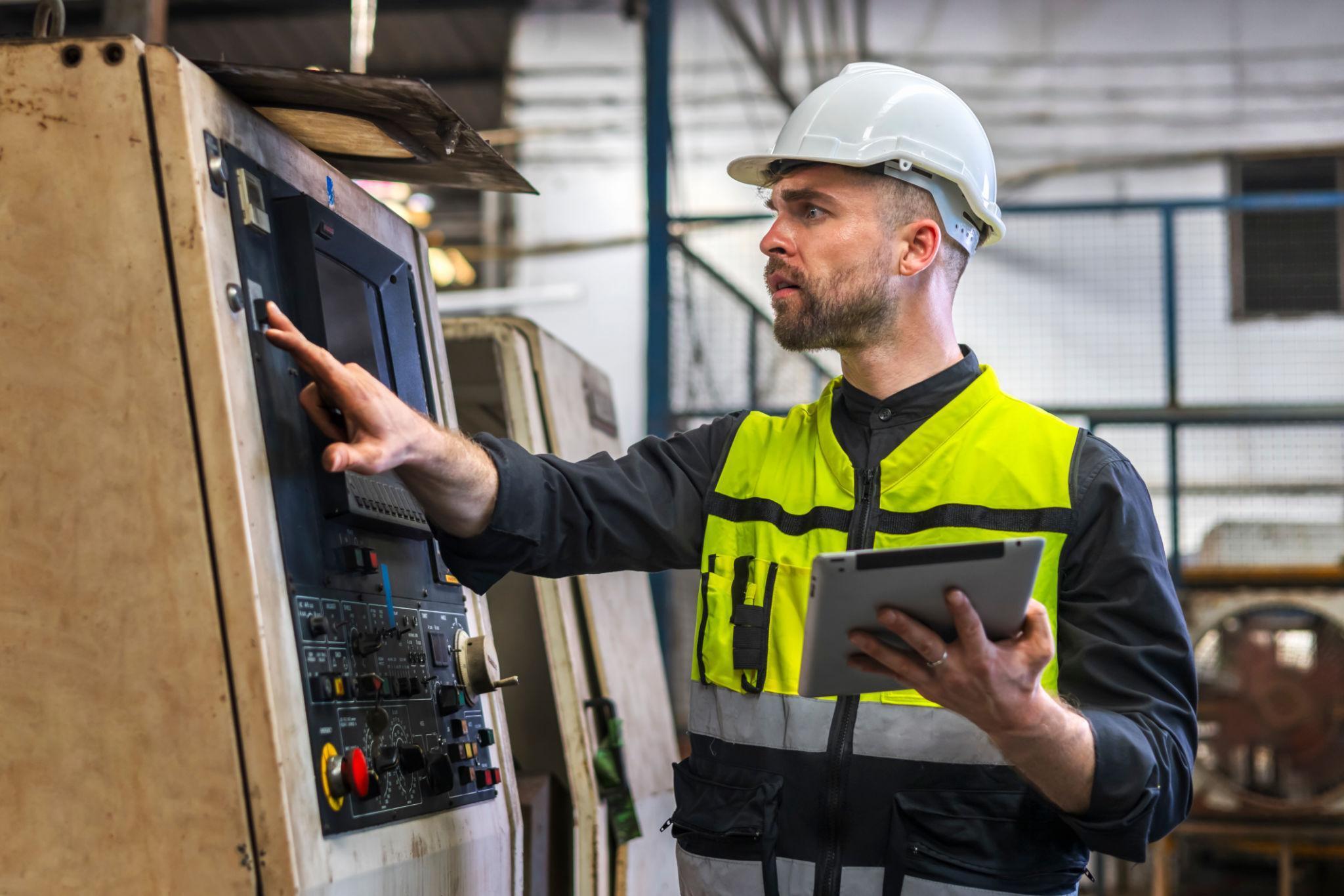
Unlock Margins Hidden in your Maintenance
Watch how leading manufacturers improve OEE, increase PM compliance, and reduce downtime through connected execution.
- 21-07-2026
How to Reduce Overtime in Manufacturing: 11 Proven Strategies for Maintenance & Operations Leaders
Overtime in manufacturing, while often viewed as a labor issue, in reality points to deeper...
- 14-07-2026
Maintenance Backlog Guide: What It Is, How to Calculate and Reduce It
When work orders pile up faster than your team can close them, you have a maintenance backlog. More...
- 13-07-2026
Reliability Centered Maintenance (RCM): Complete Guide
Not every asset deserves the same maintenance. A non-critical utility pump and a high-pressure feed...